
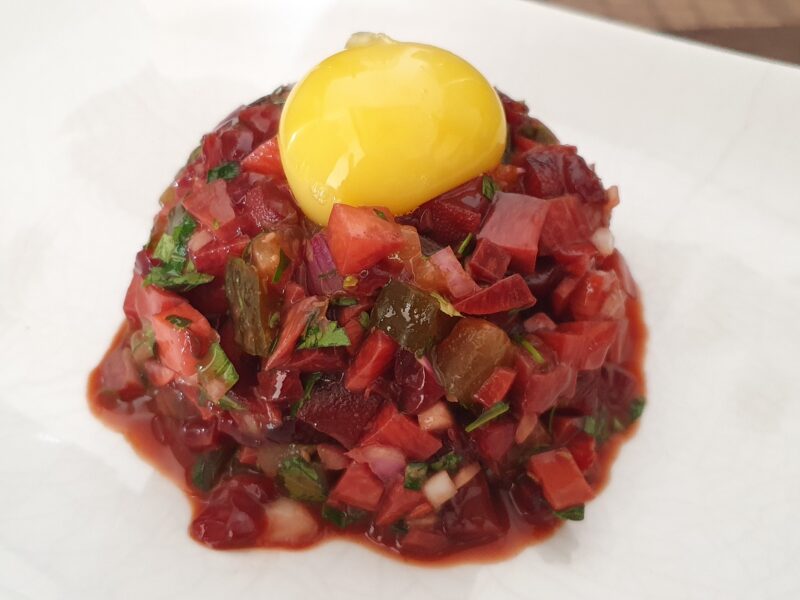
Not many mushrooms are good edibles raw. The beef steak mushroom (Fistulina hepatica), however, is one of the few that is. Because it has a meaty texture and look, it is a perfect mushroom to turn into a steak tartar. The original steak tartare is made with finely chopped raw beef, and has its origin in late 19th-century French cuisine. We swapped the beef for a beef steak mushroom and were very happy with the result! For a further wild twist, we replaced pepper with waterpepper (Persicaria hydropiper) and instead of using Worcester sauce, we used the liquid we had
Category: Fall
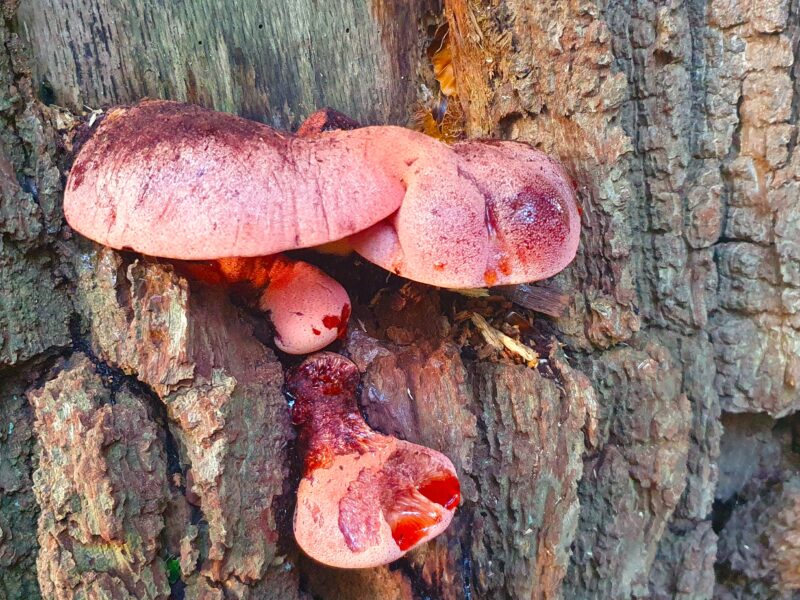
The beef steak mushroom (Fistulina hepatica) is a rather unique-looking mushroom appearing in the fall on oak trees or oak tree remains. As its name suggests, it resembles a piece of steak, including a blood-like juice coming from it when cut. The structure of this mushroom is also rather meat-like, which inspired us to make jerky out of it. Left: The beef steak mushroom growing on a tree, note the red juice drops that resemble blood. Right: mushroom prepared like traditional steak. The beef steak mushroom can be eaten cooked, but also raw, for example, as a topping for a
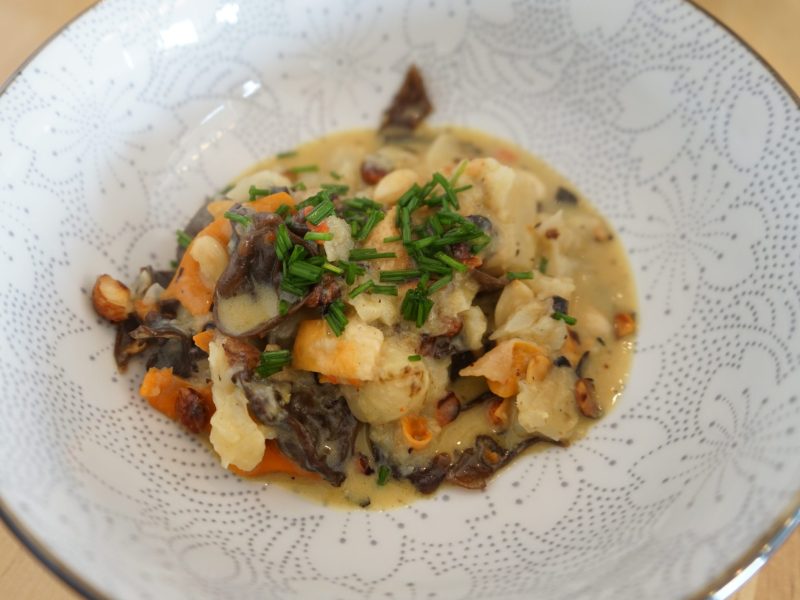
Massaman curry is a famous Thai curry that has been ranked number one in the CNN travel best food of the world ranking. There is some debate about the origin of this dish. The most widely accepted origin story is that this dish has Persian roots. This follows from the name of the dish and its ingredients. The word Massaman could be derived from the old Persian word for Muslim. The dish contains spices that are not common in other Thai curries and the trade in these spices was in the past dominated by Muslims. Key components of this dish
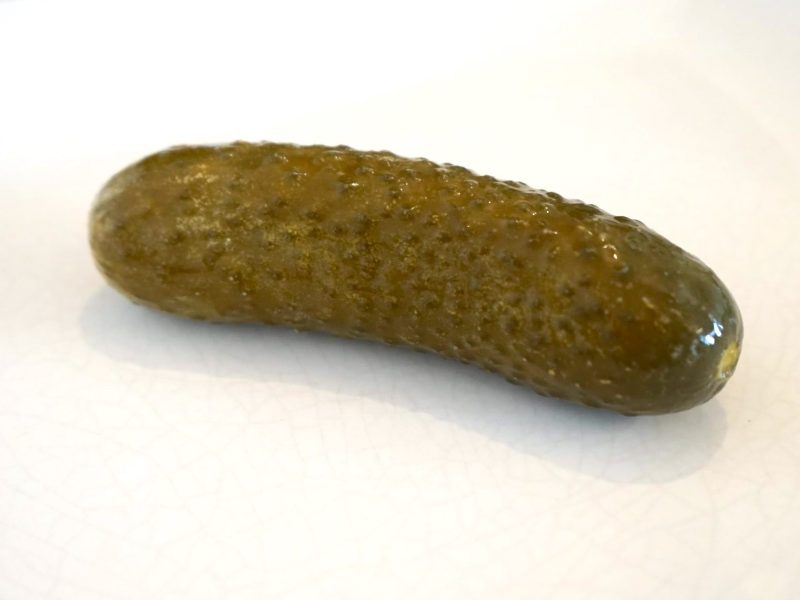
In this recipe, we made truly fermented pickles using wild aromatics. Most pickles, you can buy in shops, are not fermented but pickled using vinegar, which has its place, but gives a different flavor profile. In Eastern Europe, fermented pickles are strongly preferred and used as an ingredient, for example, in pickle soup (see serving suggestions). Typical aromatics added to pickles when fermenting are mustard seeds, horse radish, garlic, dill, and kale leaves. We found mustard (Sinapis arvensis) seeds in the wild. The other ingredients we substituted with garlic mustard (Alliaria petiolata) root, wild garlic (Allium ursinum) bulbs, hogweed (Heracleum
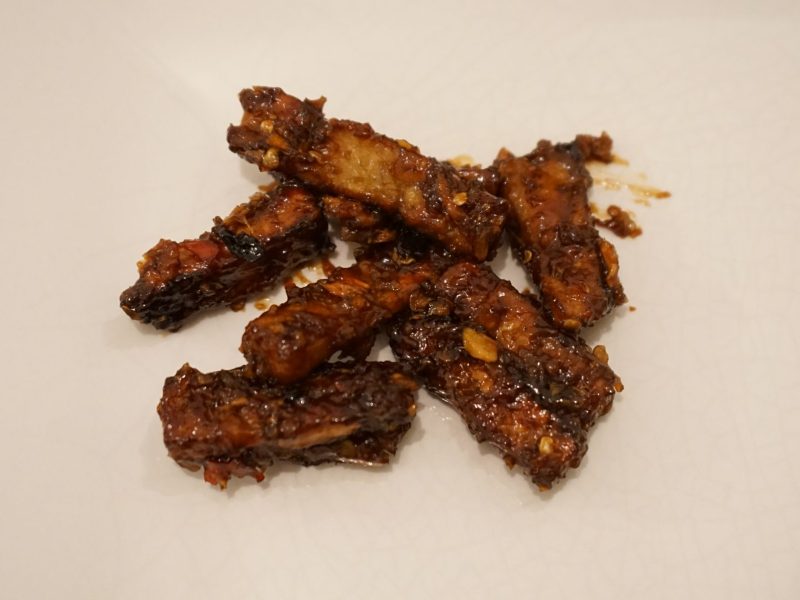
Tempeh is a traditional Indonesian food consisting of fermented beans. The most well-known variety is made from soybeans fermented with the fungus Rhizopus oligosporus. The fungus forms a thick white layer of mycelium around the beans during the fermentation process which transforms the separate beans into a single block. The fungus can grow on a variety of legumes, nuts, and seeds. To make a wild tempeh, we initially tried using beech nuts (Fagus sylvatica) which had some degree of success (we successfully inoculated the nuts) but it was hard to remove most of the inner skin of the nuts which

Quince (Cydonia oblonga) is a bush sometimes used by city planners to fill hedges. Therefor your best bet of finding it is to pay attention to hegdes in the city. In the late fall to winter it will produce peer-like fruits with a very distinctive tangy taste to it. They work great as a base for chutney. They are ripe when they turn yellow. A good amount of sugar is required to balance out the acidity of the quince. This chutney works well with any dish that’s served with other types of chutneys.

In this recipe, we utilized the black garlic oil and puffball paste from our previous recipes to create an umami chestnut (Castanea sativa) filling that can be used in many dishes. You can find some examples of serving suggestions below this recipe. In many countries, edible chestnuts are commercially available in the fall. In the wild, you can find edible chestnuts and poisonous ones (Aesculus hippocastanum). The poisonous chestnuts can be used to produce soap. Care should be taken to not confuse these two chestnut varieties. Luckily they are quite easy to distinguish. We summarised key differences in the table
Bladder wrack Boletus Crow garlic Fall Garlic mustard Giant puffball Ground elder Main course Stinkhorn Water pepper Wild garlic
Wild Ramen with black garlic oil
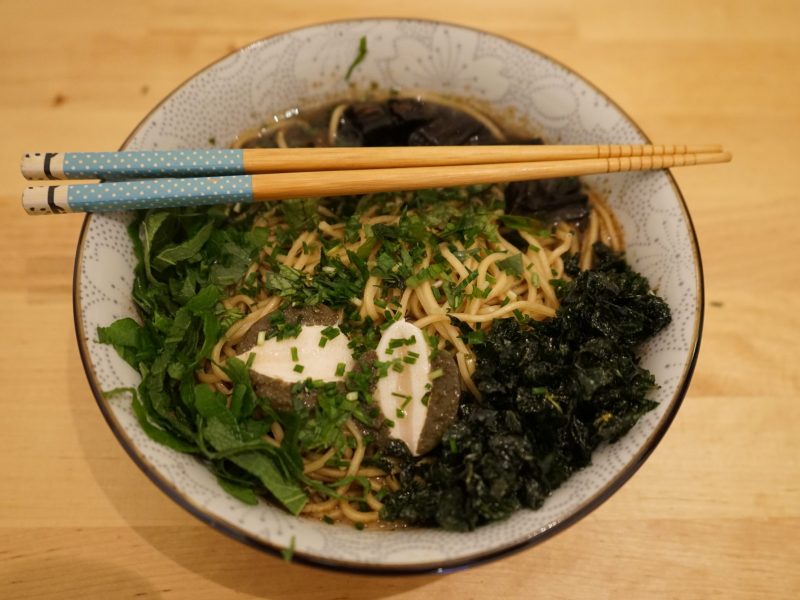
Ramen can be seen as a combination of 5 elements: broth, flavoring (tare), flavored oil, noodles, and toppings (for example egg, nori, greens). Aside from the noodles, we used wild ingredients for all elements. Starting from the stock, we used bladderwrack seaweed (Fucus vesiculosus) (introduced here) and boletus mushroom. We imitated miso based tare with koji fermented puffball (Calvatia gigantea) paste (described here). For the flavored oil, we used black wild garlic (Allium ursinum) and crow garlic (Allium vineale) oil (described here). For the toppings, we used fried ground elder (Aegopodium podagraria), which structure wise resembles nori, crow garlic, water
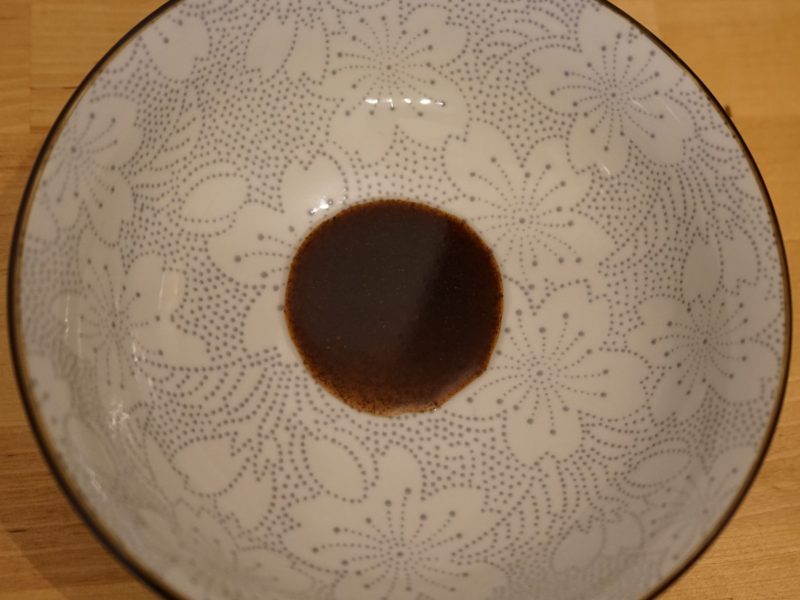
In this recipe, we show another application of wild garlic bulbs. We use two types of garlic: wild garlic (allium ursinum) and crow garlic (allium vineale). At the time when we made this recipe (fall), wild garlic doesn’t have any parts that grow above the ground so you would have dig up the bulbs from a known spot. In contrast, crow garlic does have leaves that grow above the surface at this time, although they can be a bit hard to spot between the grass. We used the bulbs of both plants to create Japanese black garlic oil, which is

This salad contains two types of seaweeds: sea lettuce (ulva spec.) and bladder wrack (Fucus vesiculosus L.), and two types of sea vegetable: sea rocket (Cakile maritima) and rock samphire (Crithmum maritimum). It can be hard to tell apart different types of seaweeds but luckily there are no poisonous ones. When you harvest them just make sure you pick them from a clean environment. The two types of seaweeds we picked are relatively easy to recognise. While determining the exact type of sea lettuce requires a microscope or even DNA research, for consumption purposes you only have be able to determine