
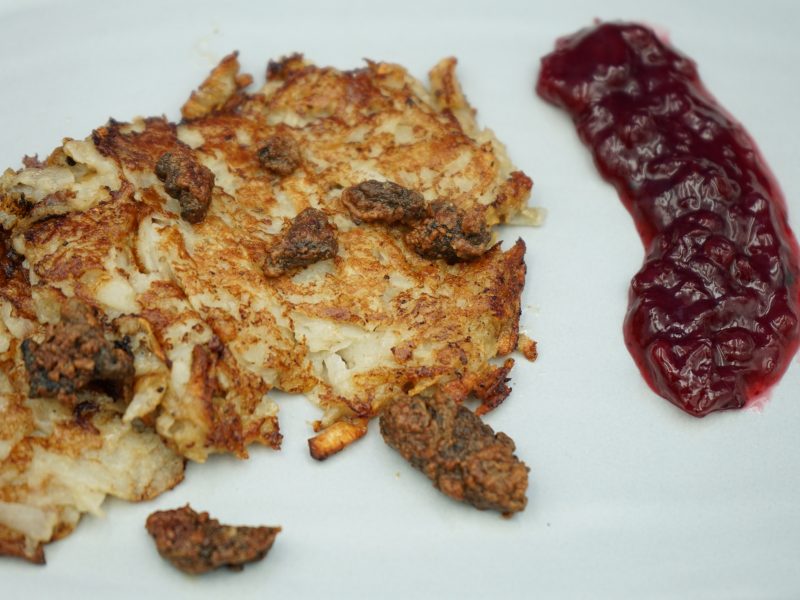
Many countries have their version of potato pancakes and so does Sweden where they call it “Raggmunk”. In Sweden, they are typically served with bacon and lingonberry jam, which we both replaced by wild counterparts for which we already posted recipes previously. We replaced potatoes with Jerusalem artichokes, which are less starchy so this recipe requires a bit more flour then usual to achieve the right binding. In our first batch, we didn’t adjust yet and found out that increasing the amount of flour by 10% resulted in the perfect binding.
Category: Jerusalem Artichoke
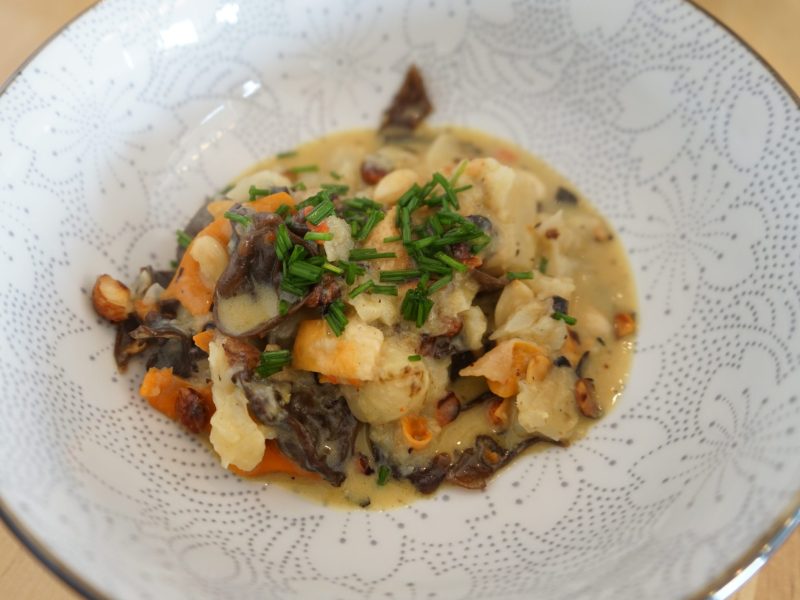
Massaman curry is a famous Thai curry that has been ranked number one in the CNN travel best food of the world ranking. There is some debate about the origin of this dish. The most widely accepted origin story is that this dish has Persian roots. This follows from the name of the dish and its ingredients. The word Massaman could be derived from the old Persian word for Muslim. The dish contains spices that are not common in other Thai curries and the trade in these spices was in the past dominated by Muslims. Key components of this dish
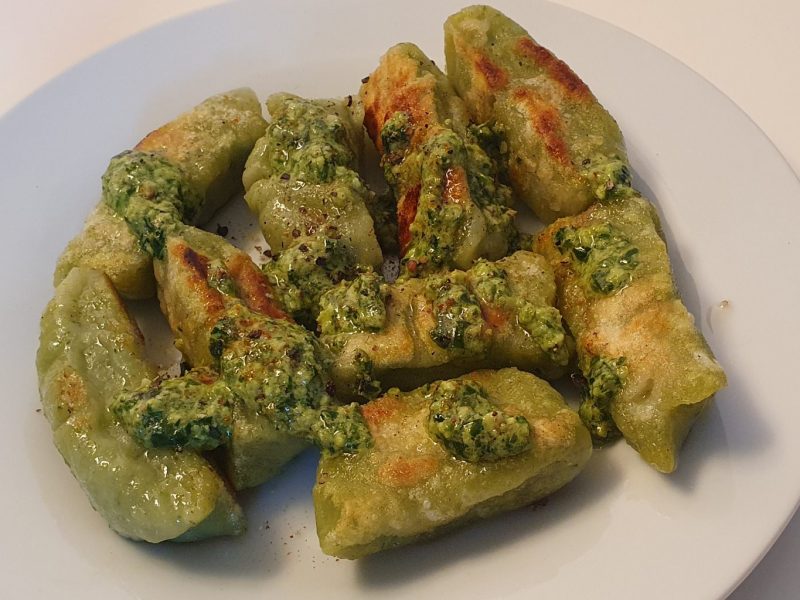
The Jerusalem Artichoke (Helianthus tuberosus), which we already used in several recipes, also called Topinambur is a related plant to the sunflower native to America but can today also be found in many parts of Europe. The plant produces thick roots which can be used like potatoes. They are sweeter than potatoes and the sweetnes increases with the season. They can be picked from fall until early spring. We made gnocchi (or Polish kopytka) out of the last Jerusalem artichoke of this season.
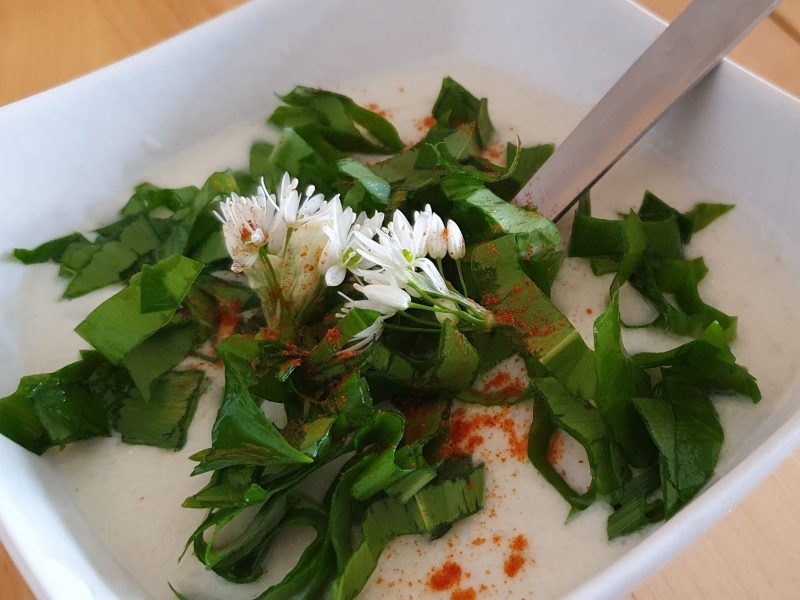
White borscht, traditionally eaten on Easter Sunday morning, is made of fermented flour sour soup base and served with eggs, sausage, and sometimes potatoes and feta cheese. Here we present a wild version of this soup. The traditional white borscht soup base is made of fermented flour (usually wheat or rye) with garlic cloves, bay leaf, and allspice. We chose oat flakes for fermentation as they give a milder flavor and wild garlic instead of garlic cloves. We replaced eggs with stinkhorn eggs and potatoes with Jerusalem artichokes.
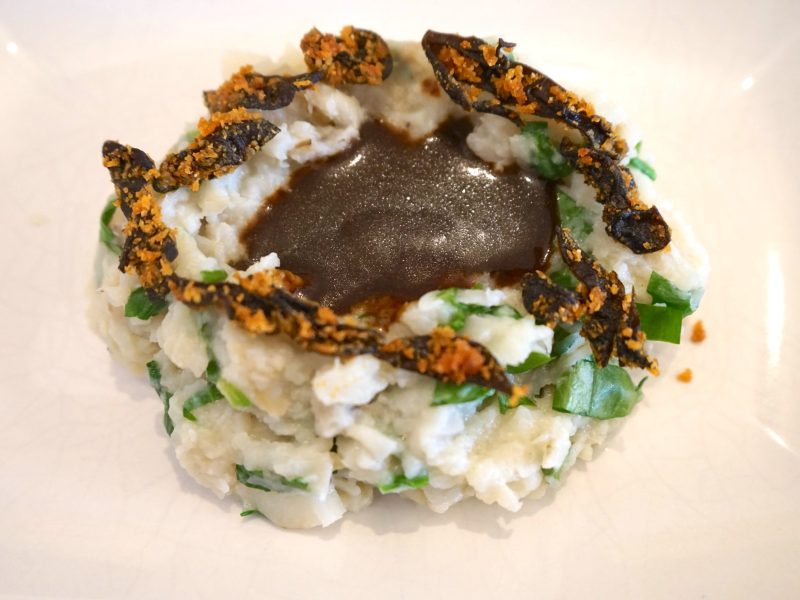
Stamppot is a traditional Dutch dish consisting of mashed potatoes with vegetables, usually some type of leafy greens. In this recipe, we made a wild version of stamppot using mashed Jerusalem artichokes and wild garlic leaves. A classic way to serve this dish is to form a “well” of stamppot filled with gravy in the middle and sprinkled on top with small pieces of crunchy bacon. We used wild versions of vegan bacon and gravy we described in earlier recipes.
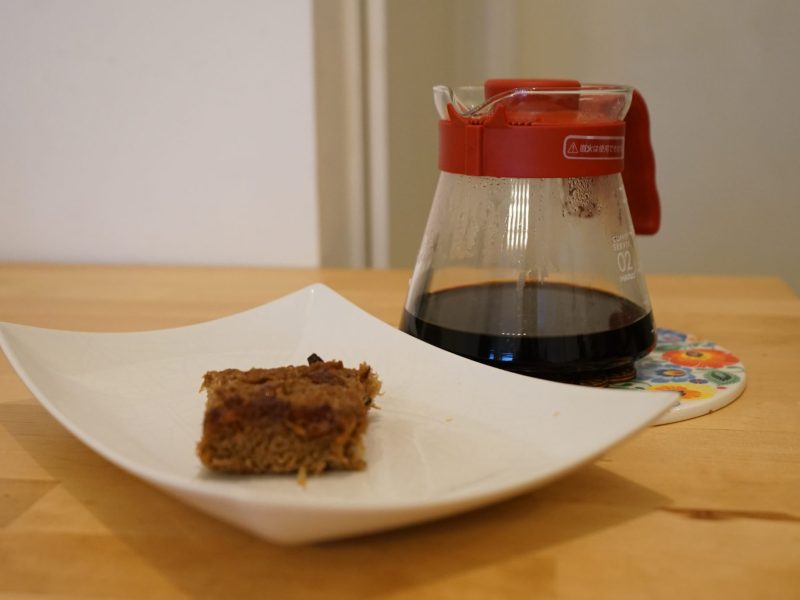
Bojo is a cake which main ingredients are grated cassava root and coconut. Its often eaten on family gatherings and birthdays. Cassava, also known as Jucca, is a popular root vegetable in South America. It is often eaten in savory dishes, similar to how you would use potatoes. But it also works well in cakes because it has some sweetness to it. Cassave used in bojo is grated and because of that it give the cake a unique structure. With an abundance of Jerusalem artichokes (Helianthus tuberosus) in our neighborhood, we tried to come up with creative ways of using
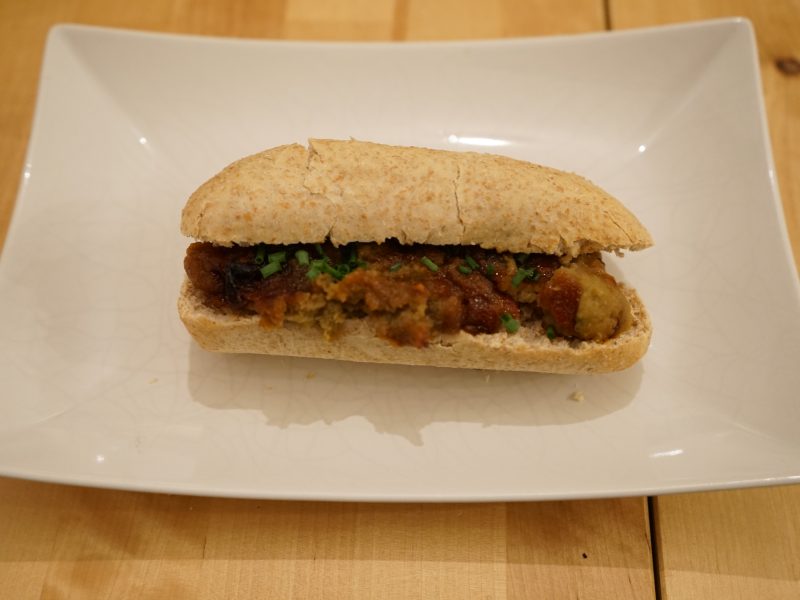
Pom is a Surinamese casserole made from the roots of pomtajer (Xanthosoma sagittifolium) with pieces of chicken, flavored with citrus juice, celery, and stock cubes. It originates from a potato-based dish introduced by European Jews, who came to Surinam in the 17th century. Pom is typically made on special occasions such as holidays or birthdays. Perhaps, this is due to practical reasons because, with a cooking time of around two hours, it is not exactly a quick dish. Pom is most often served with white rice or on a sandwich. We made a wild and vegan adaptation of this dish