
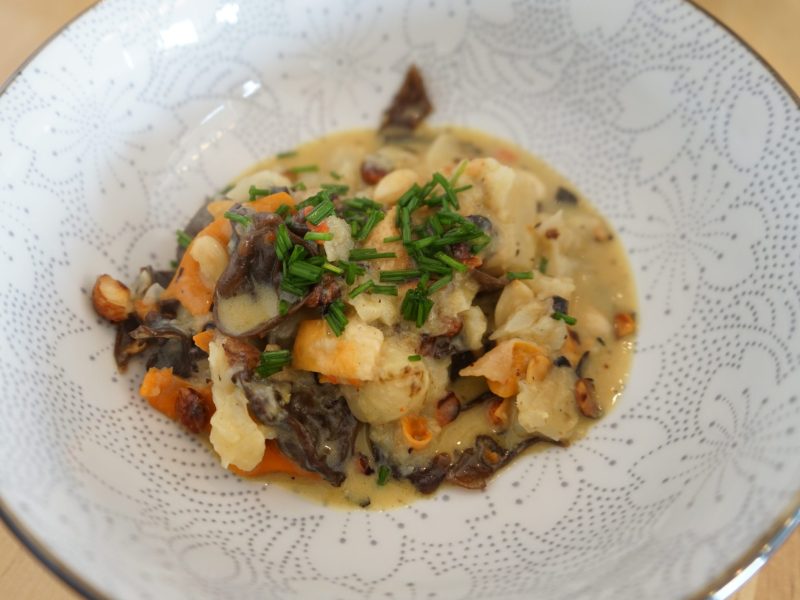
Massaman curry is a famous Thai curry that has been ranked number one in the CNN travel best food of the world ranking. There is some debate about the origin of this dish. The most widely accepted origin story is that this dish has Persian roots. This follows from the name of the dish and its ingredients. The word Massaman could be derived from the old Persian word for Muslim. The dish contains spices that are not common in other Thai curries and the trade in these spices was in the past dominated by Muslims. Key components of this dish
Category: Crow garlic
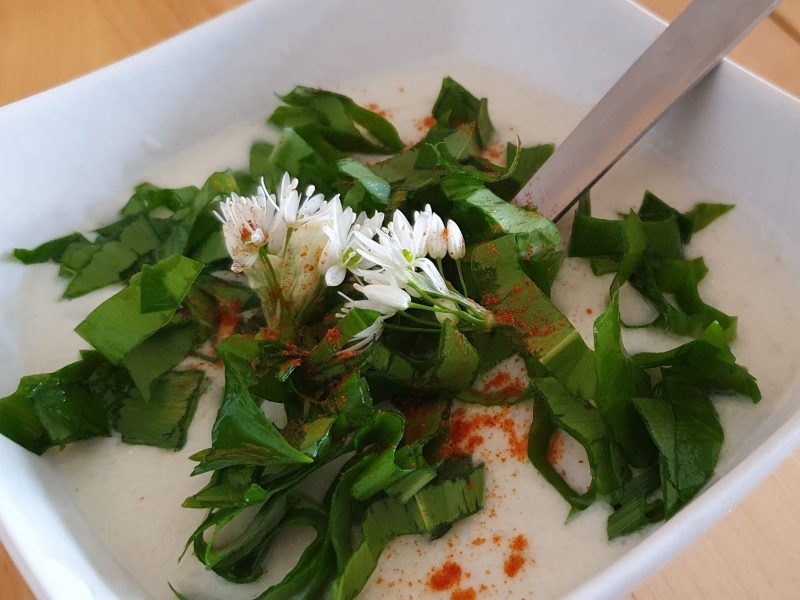
White borscht, traditionally eaten on Easter Sunday morning, is made of fermented flour sour soup base and served with eggs, sausage, and sometimes potatoes and feta cheese. Here we present a wild version of this soup. The traditional white borscht soup base is made of fermented flour (usually wheat or rye) with garlic cloves, bay leaf, and allspice. We chose oat flakes for fermentation as they give a milder flavor and wild garlic instead of garlic cloves. We replaced eggs with stinkhorn eggs and potatoes with Jerusalem artichokes.
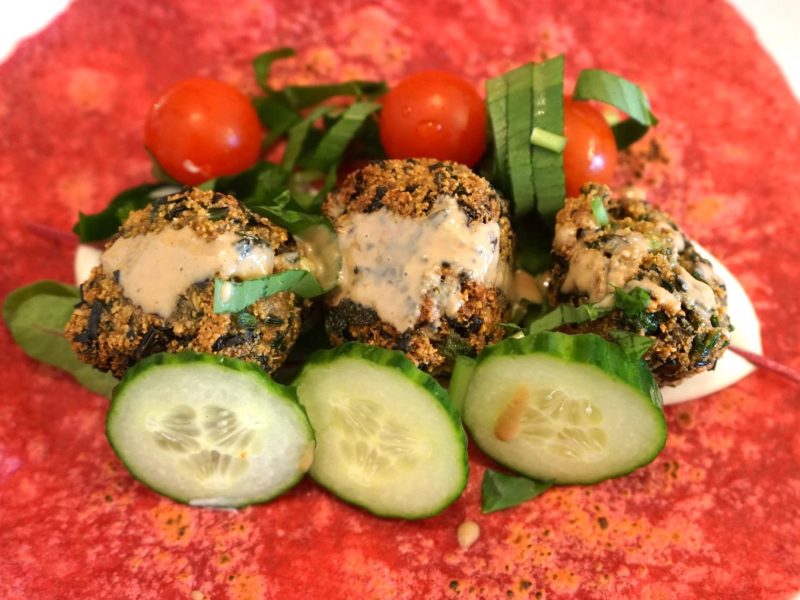
Falafels are balls made of soaked and ground chickpeas or broad beans originating from Middle Eastern cuisine. They are usually deep-fried. They can be eaten as a snack or served as part of a meal, for example on pita bread or in a wrap, with vegetables and sauce. Typically falafels are seasoned with parsley, onion, and garlic. All these plants can be replaced with wild counterparts: ground elder (Aegopodium podagraria), crow garlic (Allium vineale), and wild garlic (Allium ursinum).

With this recipe, we recreated a wild vegan version of a Dutch classic: the herring sandwich. The combination of fermented herring with onions and pickles dates back to the Jewish community of Amsterdam. They sold this trinity as a street food. Nowadays, you can find the herring special everywhere in the Netherlands in fish shops and at food stands as a topping for a sandwich. To give this dish a wild twist, we replaced the herring with fermented shaggy inkcap mushrooms (Coprinus comatus), the onions with crow garlic (Allium vineale) bulbs, and the pickles with quick pickled hogweed (Heracleum sphondylium)

In this recipe, we utilized the black garlic oil and puffball paste from our previous recipes to create an umami chestnut (Castanea sativa) filling that can be used in many dishes. You can find some examples of serving suggestions below this recipe. In many countries, edible chestnuts are commercially available in the fall. In the wild, you can find edible chestnuts and poisonous ones (Aesculus hippocastanum). The poisonous chestnuts can be used to produce soap. Care should be taken to not confuse these two chestnut varieties. Luckily they are quite easy to distinguish. We summarised key differences in the table
Bladder wrack Boletus Crow garlic Fall Garlic mustard Giant puffball Ground elder Main course Stinkhorn Water pepper Wild garlic
Wild Ramen with black garlic oil
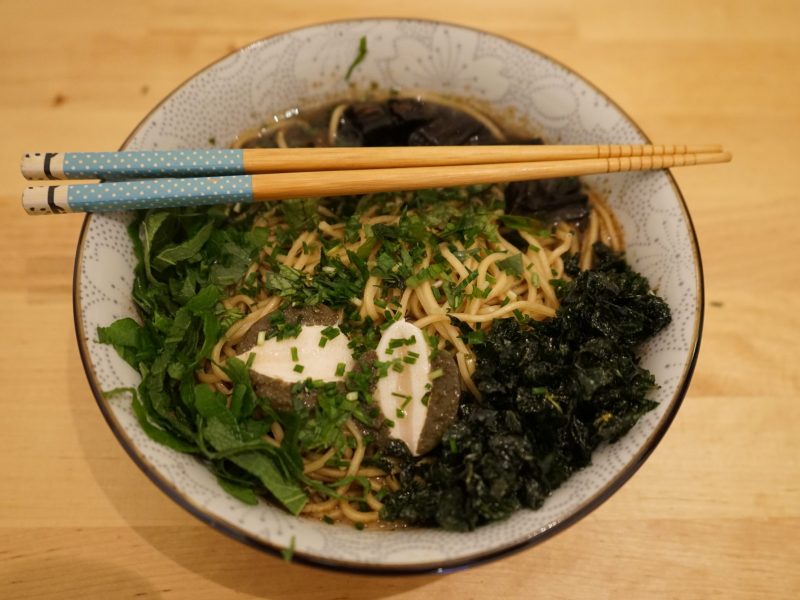
Ramen can be seen as a combination of 5 elements: broth, flavoring (tare), flavored oil, noodles, and toppings (for example egg, nori, greens). Aside from the noodles, we used wild ingredients for all elements. Starting from the stock, we used bladderwrack seaweed (Fucus vesiculosus) (introduced here) and boletus mushroom. We imitated miso based tare with koji fermented puffball (Calvatia gigantea) paste (described here). For the flavored oil, we used black wild garlic (Allium ursinum) and crow garlic (Allium vineale) oil (described here). For the toppings, we used fried ground elder (Aegopodium podagraria), which structure wise resembles nori, crow garlic, water
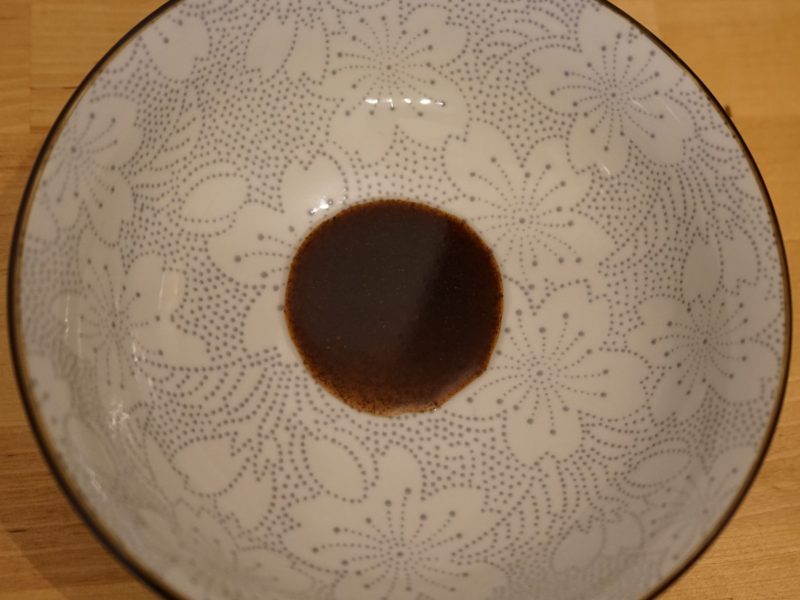
In this recipe, we show another application of wild garlic bulbs. We use two types of garlic: wild garlic (allium ursinum) and crow garlic (allium vineale). At the time when we made this recipe (fall), wild garlic doesn’t have any parts that grow above the ground so you would have dig up the bulbs from a known spot. In contrast, crow garlic does have leaves that grow above the surface at this time, although they can be a bit hard to spot between the grass. We used the bulbs of both plants to create Japanese black garlic oil, which is
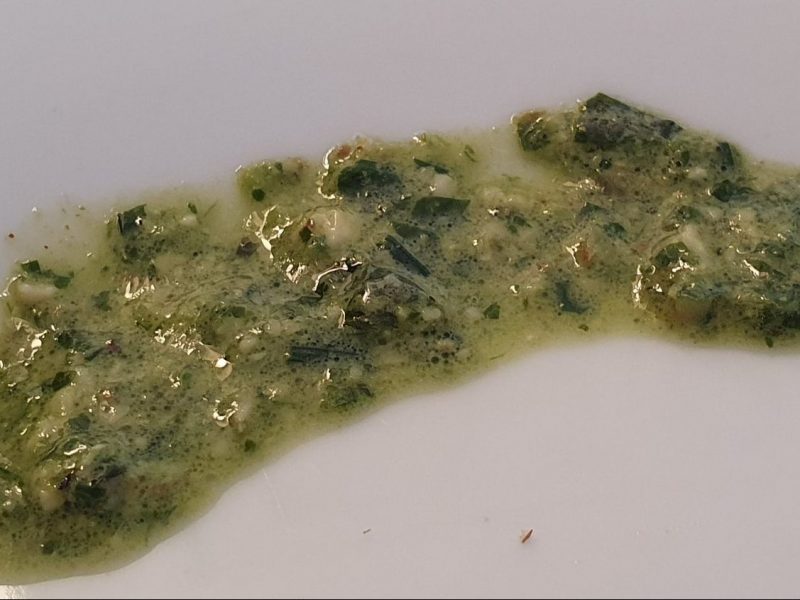
Wild garlic pesto is a popular pesto that you may have heard already about. Here we present an upgraded recipe with three wild plants: wild garlic (Allium ursinum), crow garlic (Allium vineale), and garlic mustard (Alliaria petiolata). All these plants grow in spring in a similar environment, quite often next to each other. Wild garlic has a rather mild garlic taste, crow garlic is very similar to chives, and garlic mustard tastes like mustard greens with a hint of garlic and this last one will spice up your pesto. You can use wild pesto in multiple ways: as a bread