
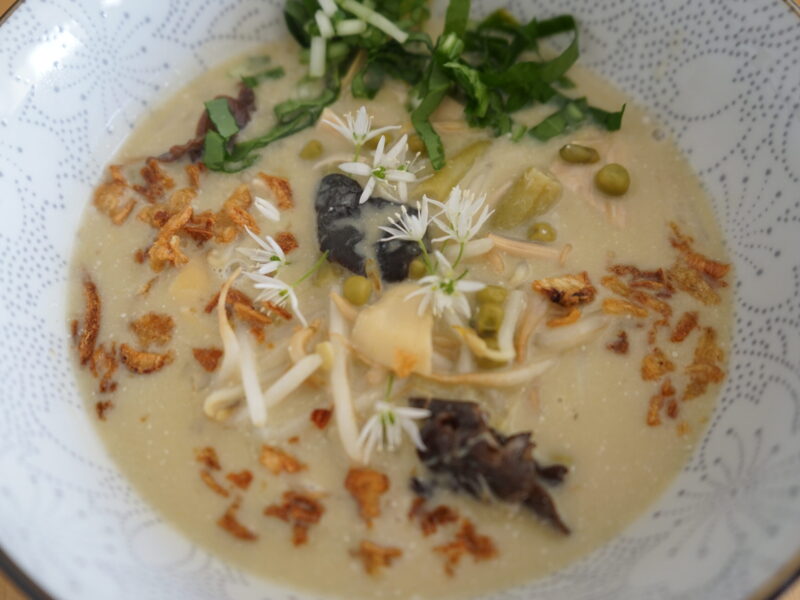
Japanese knotweed is an excellent spring vegetable for soup. Two years ago, we made a more filling ground elder-Japanese knotweed soup topped with St. George mushrooms. In this year’s recipe, we combined Japanese knotweed with coconut milk, creating a light, creamy, curry-like, fresh soup. We combined Japanese knotweed with seasonal fresh greens and added dried wood ears, saved during the winter season. For more recipes, see here.
Category: Japanese knotweed
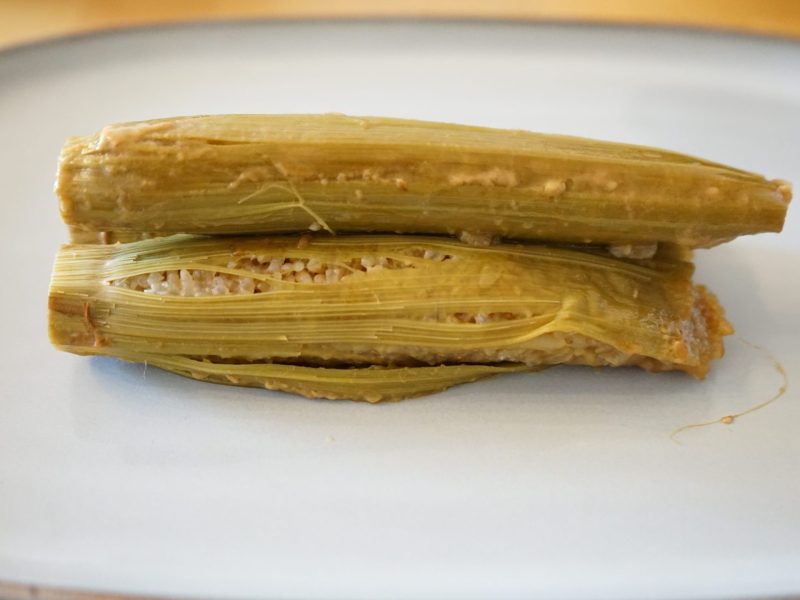
The taste of the oven-baked rice with apples dish brings back childhood memories. This simple Polish dish was an inspiration for this recipe. The fruit flavor of Japanese knotweed (Reynoutria japonica) combined with rice and cinnamon resembles the childhood favorite quite well. Knotweed also has a perfect structure to be filled with something. Knotweed shoots consist of hollow pipes connected with “joints”. Through the process of long baking, the aroma and flavour of the plant soaks into the rice and makes it irresistible. Rice desserts are very popular in many countries in the world. For example, Khao tom mud is

Cleavers (Galium aparine) is known as a sticky plant that might not be pleasant to eat. You can use its leaves and stems to make an infusion for tea or for a smoothie base. It is in the same family as coffee (Rubiaceae). Its roasted seeds can be used as a coffee substitute, they even contain caffeine. For this smoothie for the wild ingredients, we use a cleavers’ (Galium aparine) infusion as a base and sorrel (Rumex acetosa) and Japanese knotweed (read more Reynoutria japonica) as the main aromatics for a pleasant acidic kick. To give the smoothie more body
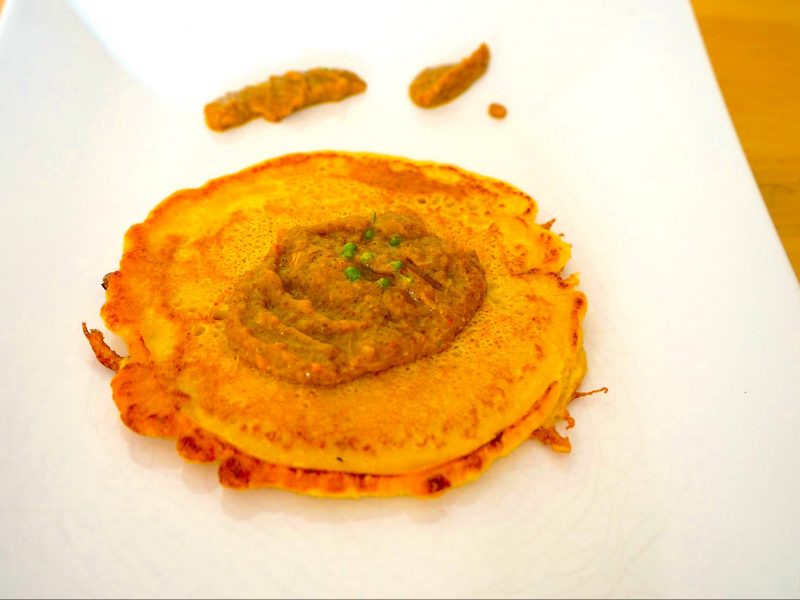
Japanese knotweed (Reynoutria japonica) is both botanically and culinary closely related to rhubarb. In Japan, it is categorized as “sansai” which translates to mountain vegetables. It is also considered as one of the worst invasive species worldwide as its deep strong roots which are hard to remove are capable of destroying infrastructure. In the kitchen the stems can be used in similar ways as rhubarb as long as its harvested when the stems are not too hard and fibrous. This is in early spring. Both rhubarb and Japanese knotweed contain oxalic acid which is not too healthy but as long
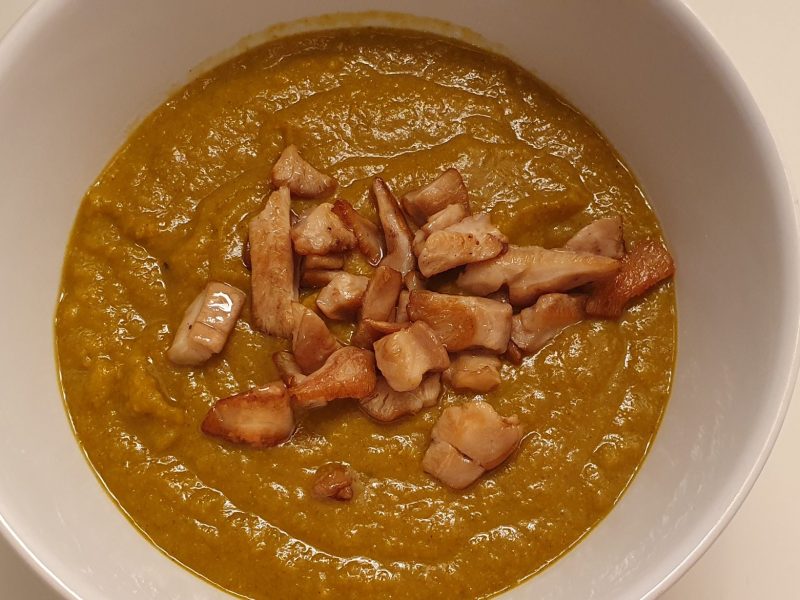
The two stars of this recipe are ground elder (Aegopodium Podagraria) and Japanese knotweed (Reynoutria japonica). Ground elder was spread around Europa by Roman soldiers. They use it as a spice. Nowadays, this plant is considered as an invasive weed. Despite being a nuisance to gardeners, ground elder has medical properties and can help treat gout and arthritis. We described Japanese knotweed here. Ground elder (Aegopodium Podagraria) leaves (left) and blooming plant (right). The inspiration for this soup was a rhubarb-carrot soup recipe. We replaced rhubarb with Japanese knotweed and carrot with ground elder. To add sweetness we used sweet potatoes and to