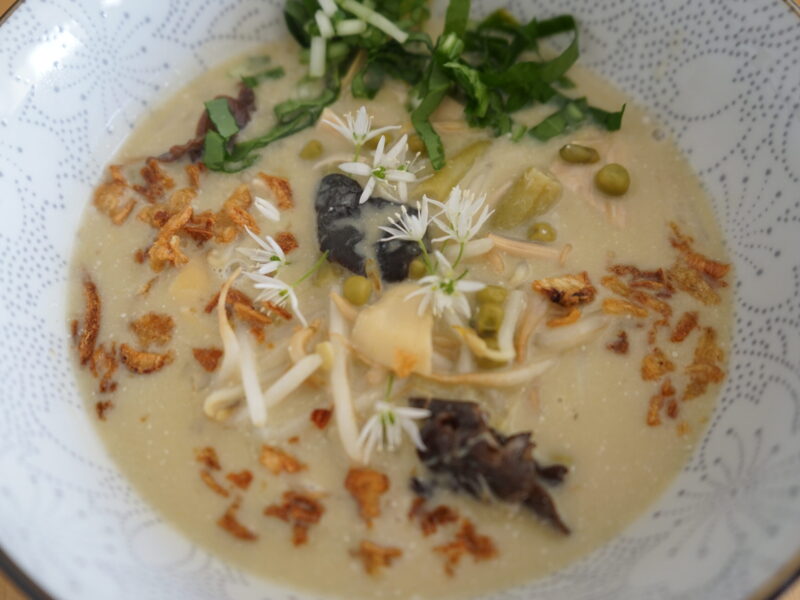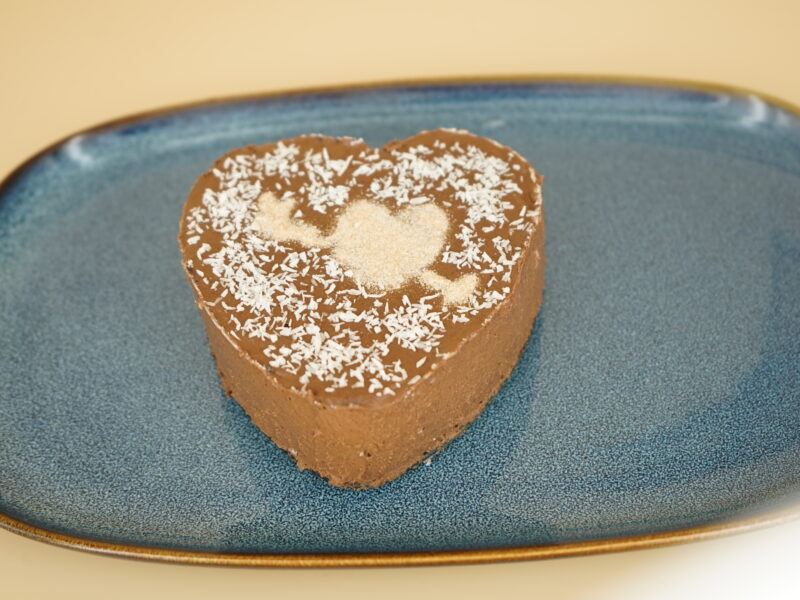
The taste of the oven-baked rice with apples dish brings back childhood memories. This simple Polish dish was an inspiration for this recipe. The fruit flavor of Japanese knotweed (Reynoutria japonica) combined with rice and cinnamon resembles the childhood favorite quite well. Knotweed also has a perfect structure to be filled with something. Knotweed shoots consist of hollow pipes connected with “joints”. Through the process of long baking, the aroma and flavour of the plant soaks into the rice and makes it irresistible.
Rice desserts are very popular in many countries in the world. For example, Khao tom mud is a sticky rice dessert flavored with coconut milk and boiled in banana leaves. We gave the knotweed recipe a Thai twist and used coconut milk in the recipe.
For those who do not have a sweet tooth, we also present a savory version of knotweed filled with rice. Nasi kuning knotweed is a variation of the famous Indonesian side dish eaten with, for example, sambal goreng or ayam goreng.
 |  |
Japanese knotweed has a short season when it is edible. Older shoots have a lot of fiber and are difficult to chew. When selecting shoots for this recipe, make sure to choose soft ones. However for this recipe its no disaster if you have some shoots that turn out to be a bit too stringy: simply discard the knotweed and just enjoy the ric that has soaked up all the knotweed flavor.
You can read more about Japanese knotweed in the description of our knotweed chutney recipe. You can also use knotweed in soup and smoothies.

Japanese knotweed filled with rice
Equipment
- 1 Sauce pan
- 1 Knife
- 1 Baking tray
- 1 funnel
- aluminium foil
- Oven
Ingredients
Khao Tom Mud knotweed
- 150 g rice
- 165 ml cocunut milk
- 105 ml water
- 100 g sugar
- 2 cinmon sticks
- 8 knotweet shoots
- oil
- 1 pinch salt
Nasi kuning knotweed
- 1 tsp lemon grass paste
- 35 g coconut block
- 4 Kafir lime leaves
- 1 Indonesian bay leaf
- 400 ml water
- 14 knotweet shoots
- oil
- salt to taste
Instructions
- Wash the knotweed. Knotweed shoots are hollow, and in between, they have "joints". Cut the pipes so that on one side, the knotweed shoot is open, and on the other side, it is closed with the "joint".

- Peel knotweed shoots. Peeling helps to remove fiber, which is difficult to chew. You can omit this step if you have very young and soft shoots.

- Spray the baking tray with some oil. Connect the open side of the knotweed shoot with the funnel and pour rice through the funnel inside the pipe.

- Fill the pipe about ⅔, leaving some space for the liquid.

- Put the pipes into the baking tray next to each other.

Khao Tom Mud knotweed
- Preheat the oven to 180℃.
- Pour water and coconut milk into the saucepan and set it on low heat. Add cinnamon stick, sugar and a pinch of salt and gently stir until the sugar dissolves.
- Pour the hot liquid over the knotweed and cover the baking tray with aluminium foil. The liquid has to cover the rice. If this is not the case, add more water.
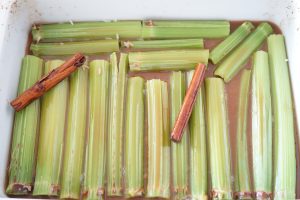
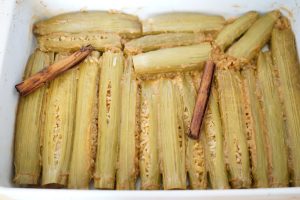
- Put the baking tray into the oven and bake for 30 minutes. After that, leave the tray in the hot oven and steam the rice under the cover for another 30 minutes.
Nasi kuning knotweed
- Preheat the oven to 180℃.
- Add coconut block, lemon grass, leaves, turmeric, salt, and water into the saucepan. Gently heat until the coconut block dissolves.

- Pour the liquid over the rice and cover the baking tray with aluminium foil. The liquid has to cover the rice. If this is not the case, add more water.

- Put the baking tray into the oven and bake for 60 minutes. Remove the leaves. After that, leave the tray in the hot oven and steam the rice under the cover for another 30 minutes.