
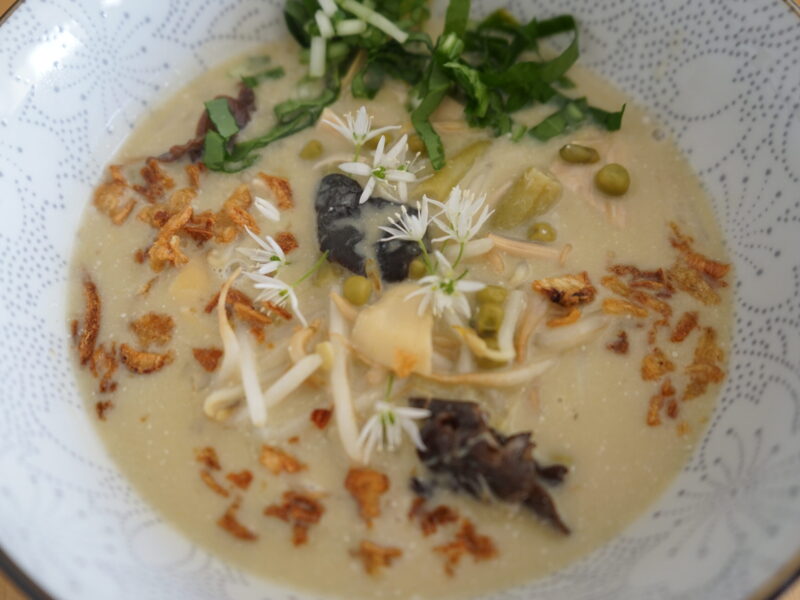
Japanese knotweed is an excellent spring vegetable for soup. Two years ago, we made a more filling ground elder-Japanese knotweed soup topped with St. George mushrooms. In this year’s recipe, we combined Japanese knotweed with coconut milk, creating a light, creamy, curry-like, fresh soup. We combined Japanese knotweed with seasonal fresh greens and added dried wood ears, saved during the winter season. For more recipes, see here.
Category: Spring
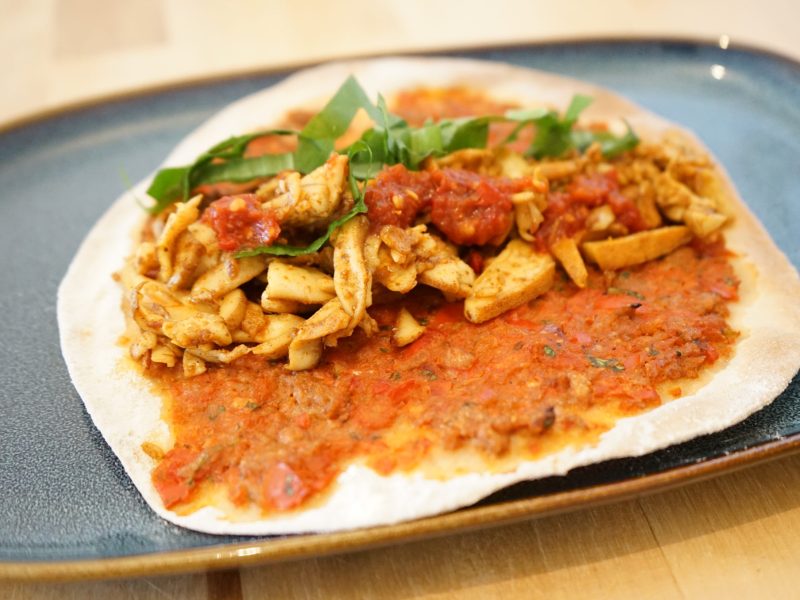
Dyrad saddle (Polyporus squamosus) can be a tough mushroom to cook, literally if you pick it too late, as it becomes rubber-like and inedible. Together with morels, it’s one of the mushrooms to kick off the mushroom season. Unfortunately, this year, there were very few morels around, so we had to be creative with Dyrad saddle. Young Dyad saddle in prima condition to pick, and the mushroom turned into kebap. We applied the same technique used to make home made chicken kebap, where you marinate the meat and then freeze it, after which you can make very thin slices of
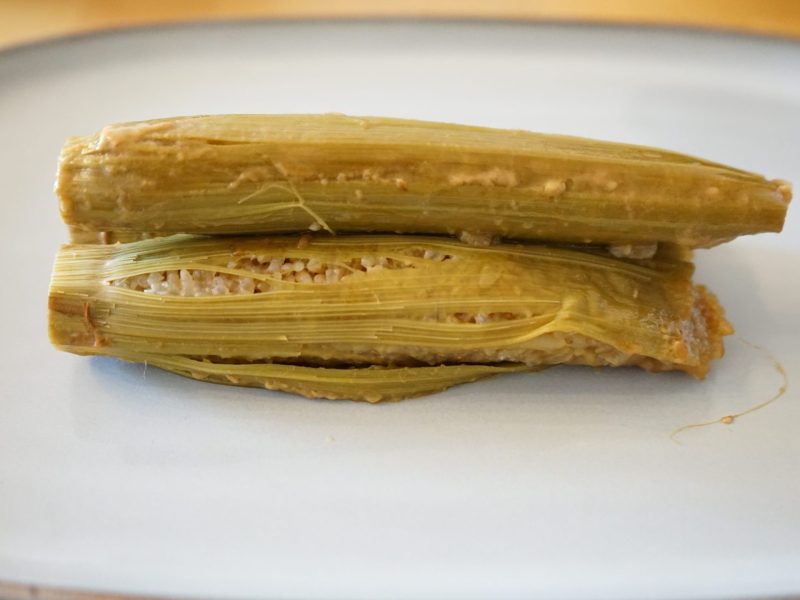
The taste of the oven-baked rice with apples dish brings back childhood memories. This simple Polish dish was an inspiration for this recipe. The fruit flavor of Japanese knotweed (Reynoutria japonica) combined with rice and cinnamon resembles the childhood favorite quite well. Knotweed also has a perfect structure to be filled with something. Knotweed shoots consist of hollow pipes connected with “joints”. Through the process of long baking, the aroma and flavour of the plant soaks into the rice and makes it irresistible. Rice desserts are very popular in many countries in the world. For example, Khao tom mud is
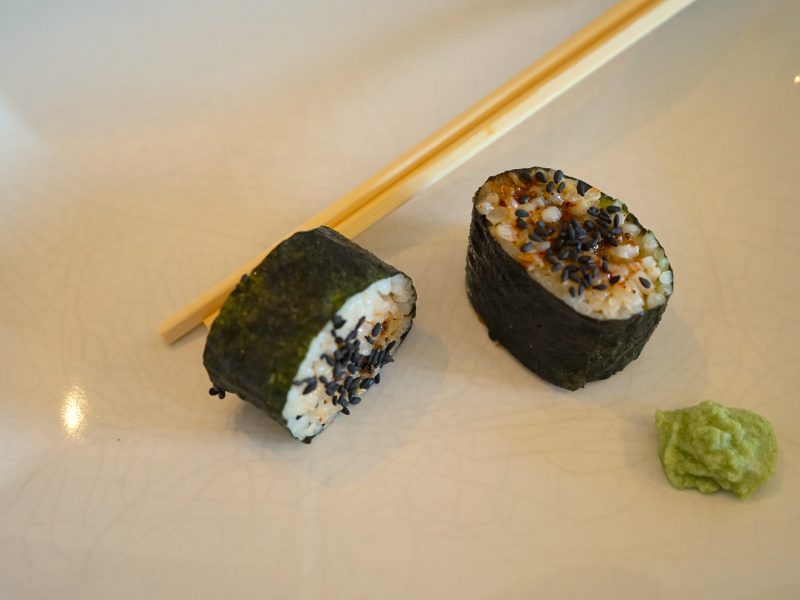
Fermented mushrooms go well with sushi and they can be used as a vegan substitute for fish (more about this here). In this recipe, we show how to make a spicy fermented St. George mushroom maki. This type of mushroom is great for fermentation due to its taste and structure (see this post).
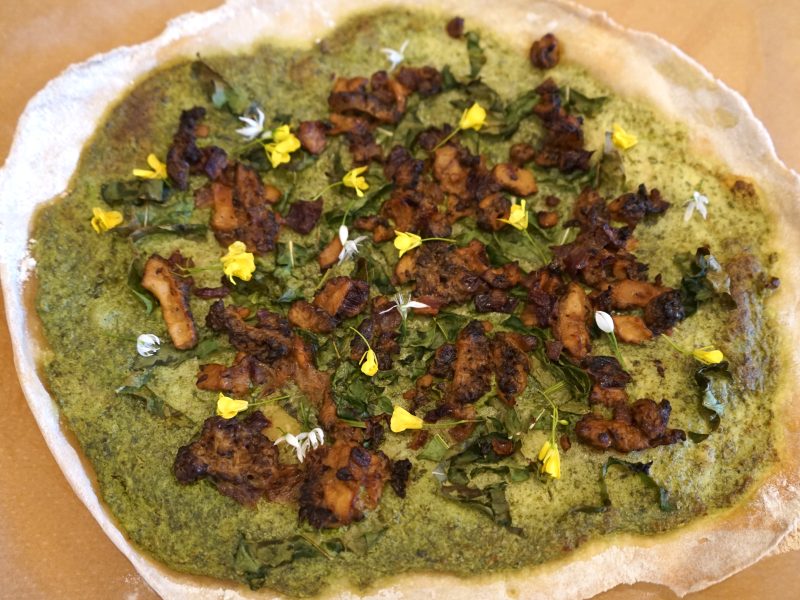
Tarte flambée or Flammkuchen is a type of flatbread with toppings that originated from Alsace. It is reminiscent of Italian pizza but tarte flambée dough does not contain yeasts. Tarte flambée can have a variety of toppings. The most well-known is the one with bacon, onion, and crème fraîche. This recipe was inspired by the Forestière variety of tarte flambée with mushrooms as a topping. Arguably the holy grail of mushrooms of the spring season are morels (Morchella). They have a very short season from late March until May (in Europe). Morels are a family of mushrooms with different subvarieties.
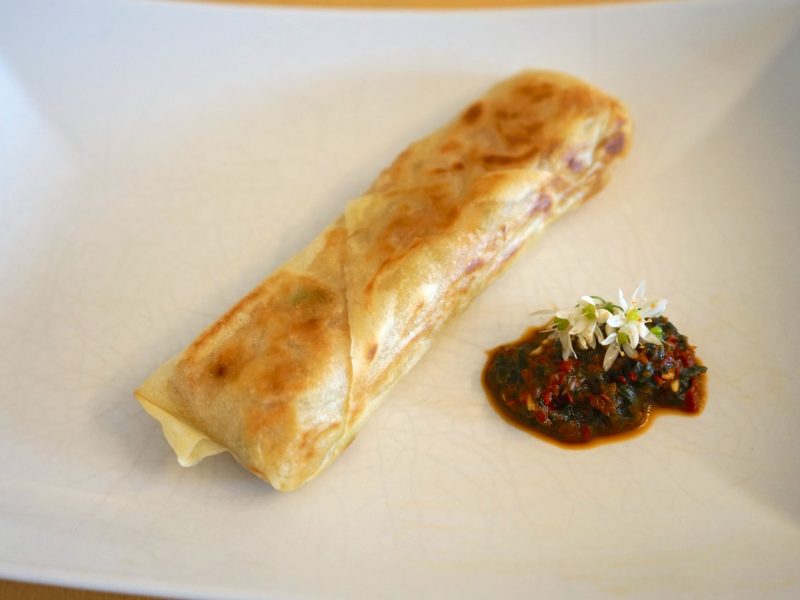
Sambal is a spicy condiment from Indonesian and Malaysian cuisine. It consists of ground chilies and salt with optionally other aromatics and ingredients. We experimented with adding fermented wild garlic to basic sambal, which turned out to be a match made in heaven. Once prepared, the sambal can be kept for a long time in the fridge.
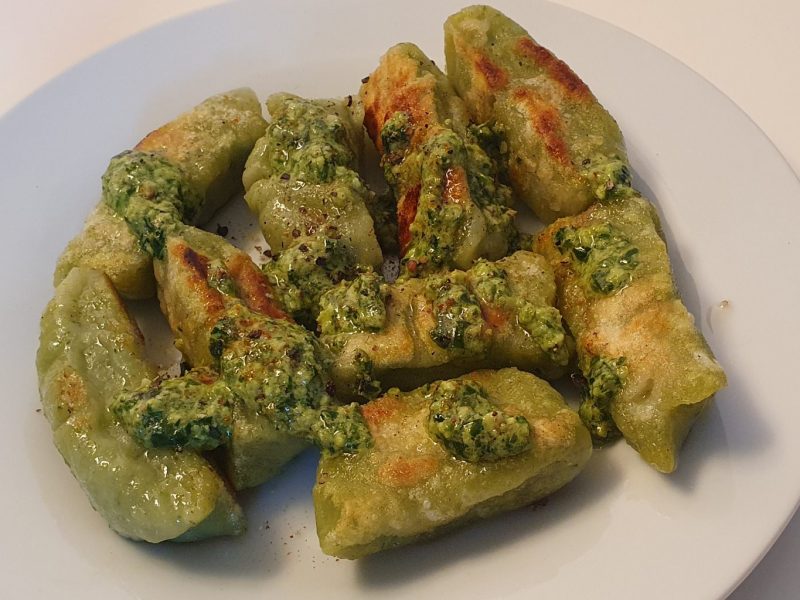
The Jerusalem Artichoke (Helianthus tuberosus), which we already used in several recipes, also called Topinambur is a related plant to the sunflower native to America but can today also be found in many parts of Europe. The plant produces thick roots which can be used like potatoes. They are sweeter than potatoes and the sweetnes increases with the season. They can be picked from fall until early spring. We made gnocchi (or Polish kopytka) out of the last Jerusalem artichoke of this season.
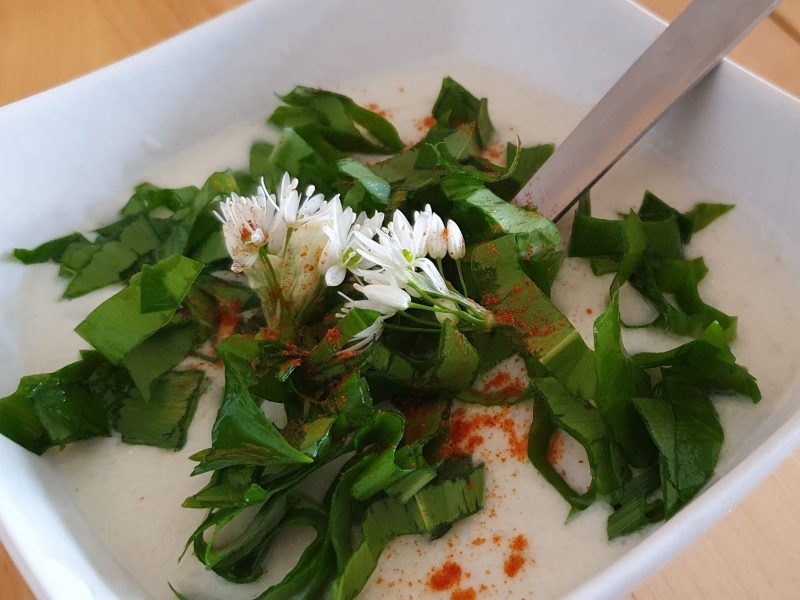
White borscht, traditionally eaten on Easter Sunday morning, is made of fermented flour sour soup base and served with eggs, sausage, and sometimes potatoes and feta cheese. Here we present a wild version of this soup. The traditional white borscht soup base is made of fermented flour (usually wheat or rye) with garlic cloves, bay leaf, and allspice. We chose oat flakes for fermentation as they give a milder flavor and wild garlic instead of garlic cloves. We replaced eggs with stinkhorn eggs and potatoes with Jerusalem artichokes.
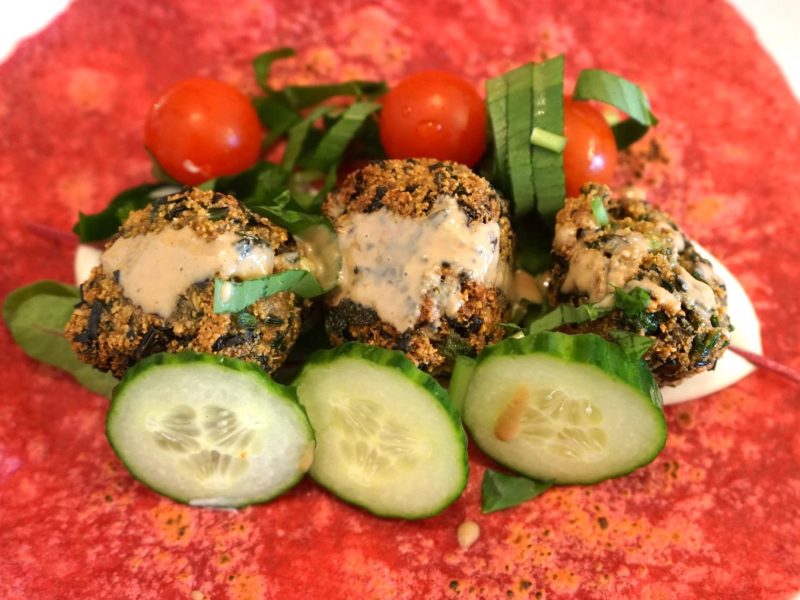
Falafels are balls made of soaked and ground chickpeas or broad beans originating from Middle Eastern cuisine. They are usually deep-fried. They can be eaten as a snack or served as part of a meal, for example on pita bread or in a wrap, with vegetables and sauce. Typically falafels are seasoned with parsley, onion, and garlic. All these plants can be replaced with wild counterparts: ground elder (Aegopodium podagraria), crow garlic (Allium vineale), and wild garlic (Allium ursinum).
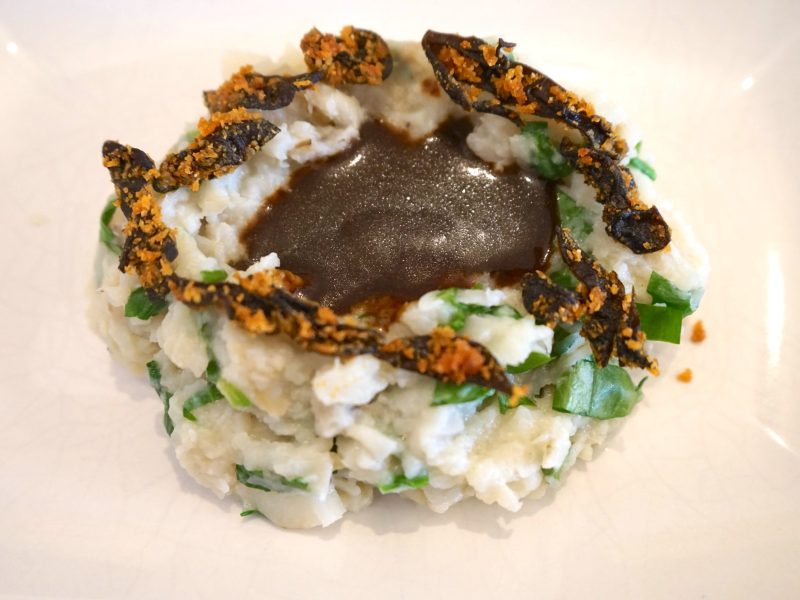
Stamppot is a traditional Dutch dish consisting of mashed potatoes with vegetables, usually some type of leafy greens. In this recipe, we made a wild version of stamppot using mashed Jerusalem artichokes and wild garlic leaves. A classic way to serve this dish is to form a “well” of stamppot filled with gravy in the middle and sprinkled on top with small pieces of crunchy bacon. We used wild versions of vegan bacon and gravy we described in earlier recipes.