
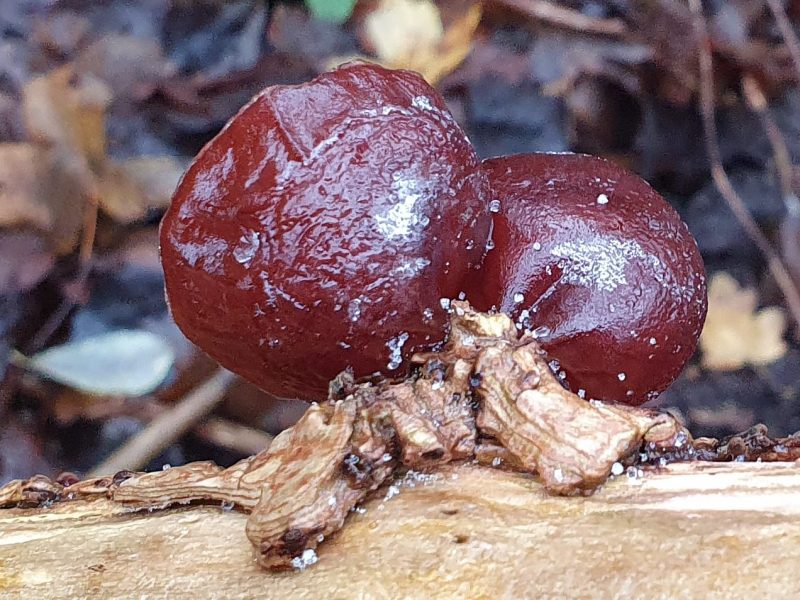
Wood ears (Auricularia auricula-judae) are mushrooms that can be found all year round, mostly when there has been a lot of rain fall. They grow on dying and dead tree part and have a preference for elder trees. Historically, in the west, they were never considered an edible mushroom however in Asia they have been eaten for centuries. In this recipes, we incorporate them in spring rolls. Spring rolls are a snack typically found in most Asian restaurants in the West. They originated from China and there are many varieties. The version we describe here is a Chinese style fried
Category: Giant puffball

In this recipe, we utilized the black garlic oil and puffball paste from our previous recipes to create an umami chestnut (Castanea sativa) filling that can be used in many dishes. You can find some examples of serving suggestions below this recipe. In many countries, edible chestnuts are commercially available in the fall. In the wild, you can find edible chestnuts and poisonous ones (Aesculus hippocastanum). The poisonous chestnuts can be used to produce soap. Care should be taken to not confuse these two chestnut varieties. Luckily they are quite easy to distinguish. We summarised key differences in the table
Bladder wrack Boletus Crow garlic Fall Garlic mustard Giant puffball Ground elder Main course Stinkhorn Water pepper Wild garlic
Wild Ramen with black garlic oil
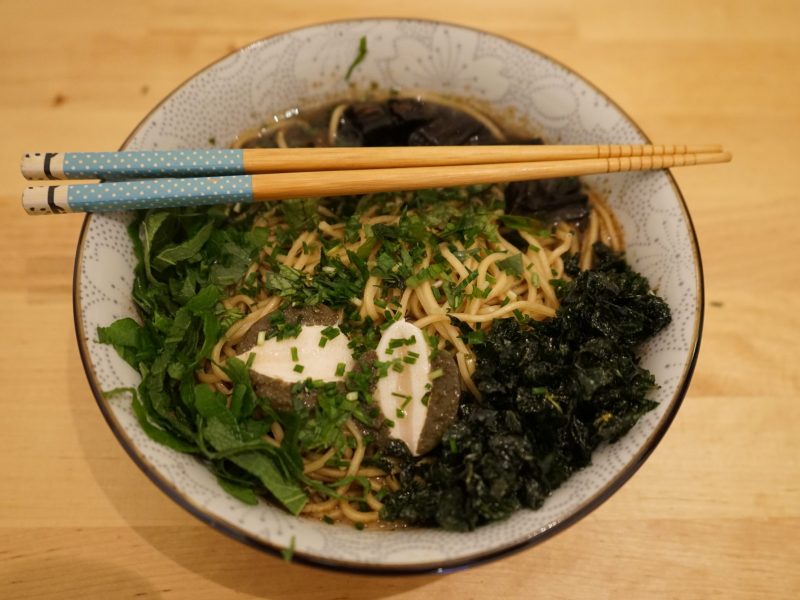
Ramen can be seen as a combination of 5 elements: broth, flavoring (tare), flavored oil, noodles, and toppings (for example egg, nori, greens). Aside from the noodles, we used wild ingredients for all elements. Starting from the stock, we used bladderwrack seaweed (Fucus vesiculosus) (introduced here) and boletus mushroom. We imitated miso based tare with koji fermented puffball (Calvatia gigantea) paste (described here). For the flavored oil, we used black wild garlic (Allium ursinum) and crow garlic (Allium vineale) oil (described here). For the toppings, we used fried ground elder (Aegopodium podagraria), which structure wise resembles nori, crow garlic, water

With an excess of Giant Puffballs (Calvatia gigantea) around, we were thinking of a way to do something with them that can be stored for a longer time. Inspired by recent success in making miso paste from scratch, we decided to use the same procedure for fermenting puffballs. Initially the result was not quite like miso but after about two months the taste was getting quite similar to miso. Miso paste (like many other fermented foods) is made using a fungus called Koji (Aspergillus oryzae). You can isolate Koji from store-bought vegetables if you feel like doing everything from scratch.