
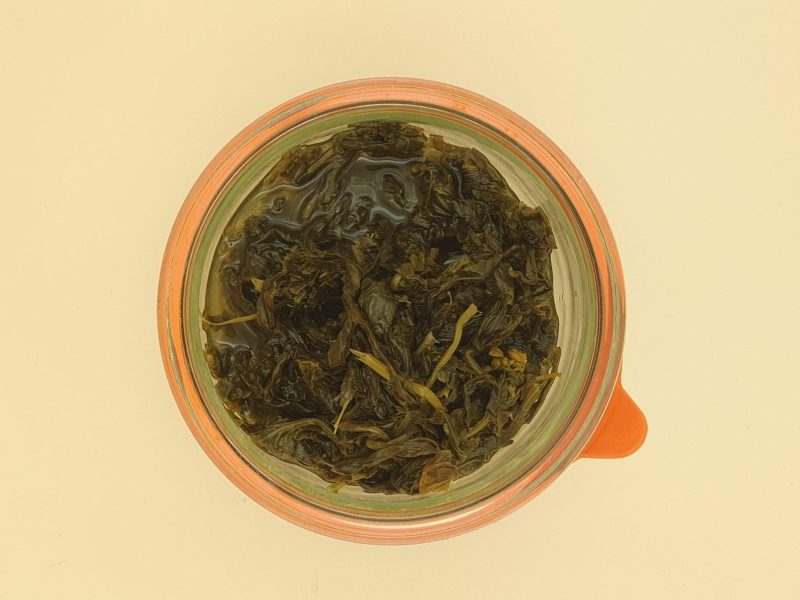
Saurkraud is a popular ingredient in many Easter European dishes. It can be used as a base for soups or as a dumpling filling. Saurkraud is made of fermented cabbage. The cultivated cabbage belongs to the same Brassica family as the black mustard (Brassica nigra) and wild (field) mustard (Brassica arvensis). Wild Brassicas have a stronger taste than their cultivated cousins, with noticeable mustard and broccoli flavors (broccoli belongs to the same family). They can be fermented in the same way as cultivated cabbage. You can use the fermented mustard in many ways, for example, together with mushrooms as a
Category: Condiment
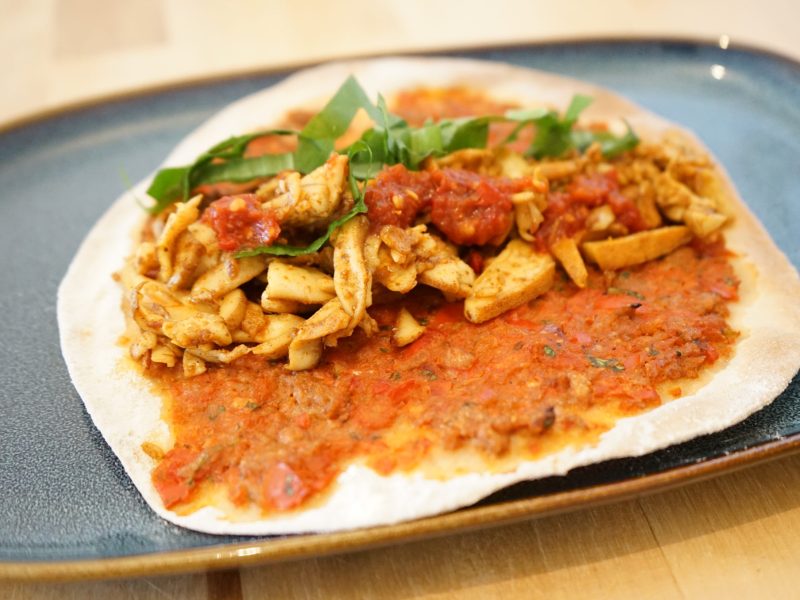
Dyrad saddle (Polyporus squamosus) can be a tough mushroom to cook, literally if you pick it too late, as it becomes rubber-like and inedible. Together with morels, it’s one of the mushrooms to kick off the mushroom season. Unfortunately, this year, there were very few morels around, so we had to be creative with Dyrad saddle. Young Dyad saddle in prima condition to pick, and the mushroom turned into kebap. We applied the same technique used to make home made chicken kebap, where you marinate the meat and then freeze it, after which you can make very thin slices of
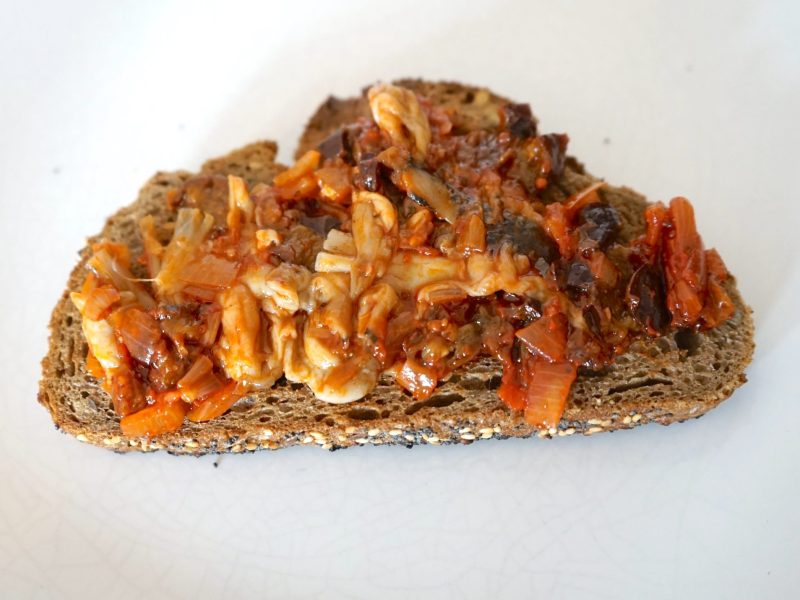
One must have at the Christmas dinner tables in Poland is herring. There are multiple varieties of traditional Christmas herring, including mustard herring, sour cream herring, or Kashubian-style herring. Kashubian-style herring originated in the Kashubian region of north Poland but is also very popular in other parts of this country. The fermented herring is mixed with tomato sauce, aromatics, and raisins or prunes. It can be prepared in advance, a day or two before Christmas because it will develop the flavor with time. In this recipe, we recreated beloved Christmas’ herring using fermented shaggy inkcap mushrooms. We chose shaggy inkcap mushrooms
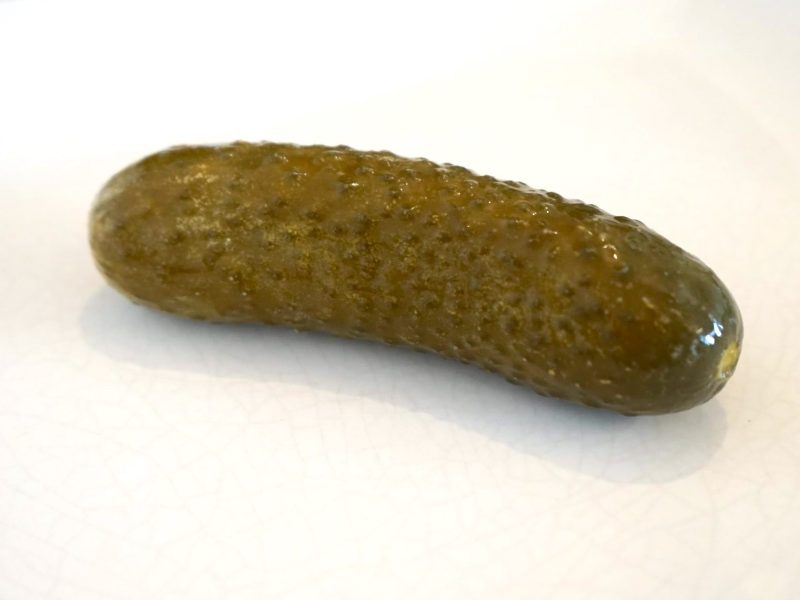
In this recipe, we made truly fermented pickles using wild aromatics. Most pickles, you can buy in shops, are not fermented but pickled using vinegar, which has its place, but gives a different flavor profile. In Eastern Europe, fermented pickles are strongly preferred and used as an ingredient, for example, in pickle soup (see serving suggestions). Typical aromatics added to pickles when fermenting are mustard seeds, horse radish, garlic, dill, and kale leaves. We found mustard (Sinapis arvensis) seeds in the wild. The other ingredients we substituted with garlic mustard (Alliaria petiolata) root, wild garlic (Allium ursinum) bulbs, hogweed (Heracleum
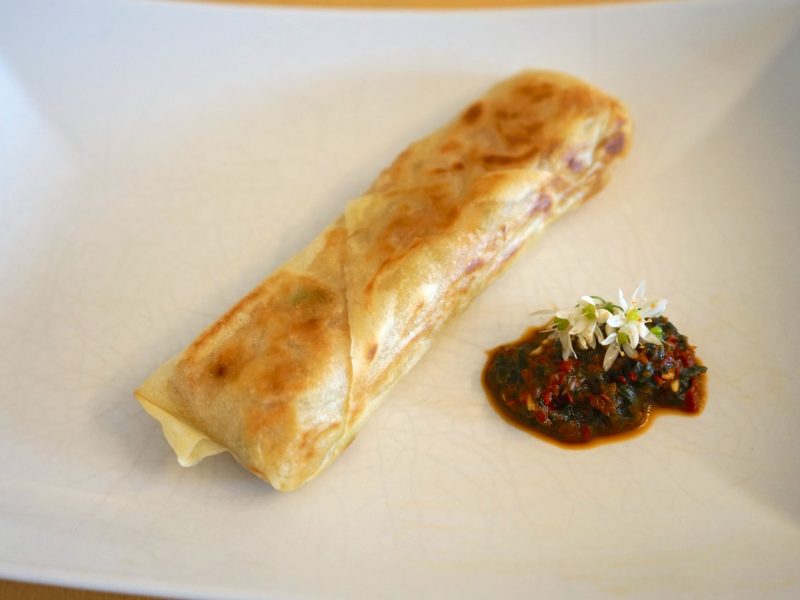
Sambal is a spicy condiment from Indonesian and Malaysian cuisine. It consists of ground chilies and salt with optionally other aromatics and ingredients. We experimented with adding fermented wild garlic to basic sambal, which turned out to be a match made in heaven. Once prepared, the sambal can be kept for a long time in the fridge.
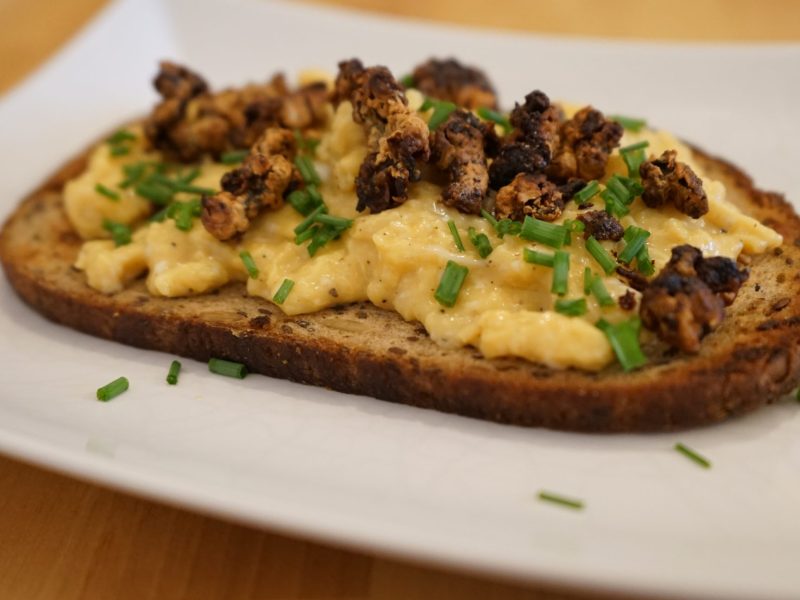
This recipe is about doing something creative with a bit of an obscure winter mushroom: Black Witch’s butter (Exidia glandulosa). It is not exactly known as a mushroom with high culinary value, it can however be used to create a vegan bacon substitute. Its neutral taste and soft texture lend it self well for this application. The mushroom can be found all year round, mostly on oak trees. However, the ideal season for it is in the winter, when there is not much else. Black Witch’s butter can survive frost as you ca see on the picture below. Black Witch’s

Quince (Cydonia oblonga) is a bush sometimes used by city planners to fill hedges. Therefor your best bet of finding it is to pay attention to hegdes in the city. In the late fall to winter it will produce peer-like fruits with a very distinctive tangy taste to it. They work great as a base for chutney. They are ripe when they turn yellow. A good amount of sugar is required to balance out the acidity of the quince. This chutney works well with any dish that’s served with other types of chutneys.

In this recipe, we utilized the black garlic oil and puffball paste from our previous recipes to create an umami chestnut (Castanea sativa) filling that can be used in many dishes. You can find some examples of serving suggestions below this recipe. In many countries, edible chestnuts are commercially available in the fall. In the wild, you can find edible chestnuts and poisonous ones (Aesculus hippocastanum). The poisonous chestnuts can be used to produce soap. Care should be taken to not confuse these two chestnut varieties. Luckily they are quite easy to distinguish. We summarised key differences in the table
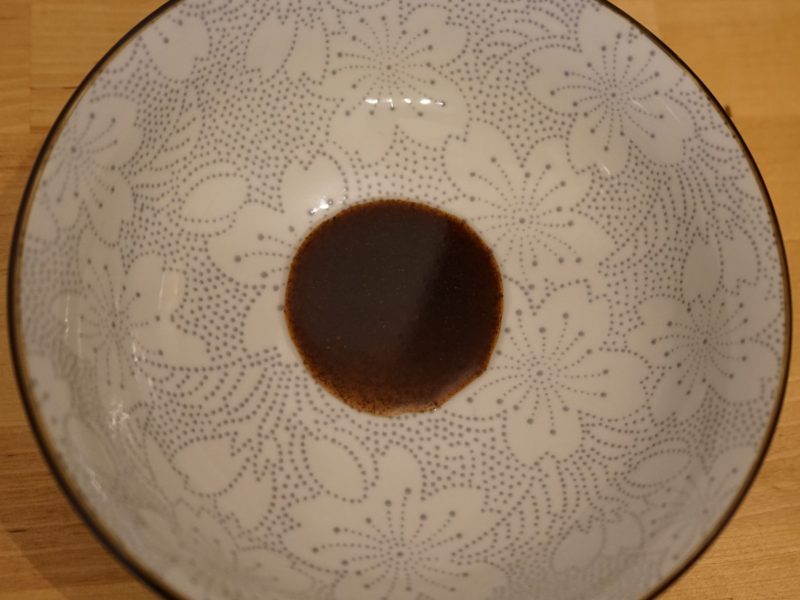
In this recipe, we show another application of wild garlic bulbs. We use two types of garlic: wild garlic (allium ursinum) and crow garlic (allium vineale). At the time when we made this recipe (fall), wild garlic doesn’t have any parts that grow above the ground so you would have dig up the bulbs from a known spot. In contrast, crow garlic does have leaves that grow above the surface at this time, although they can be a bit hard to spot between the grass. We used the bulbs of both plants to create Japanese black garlic oil, which is
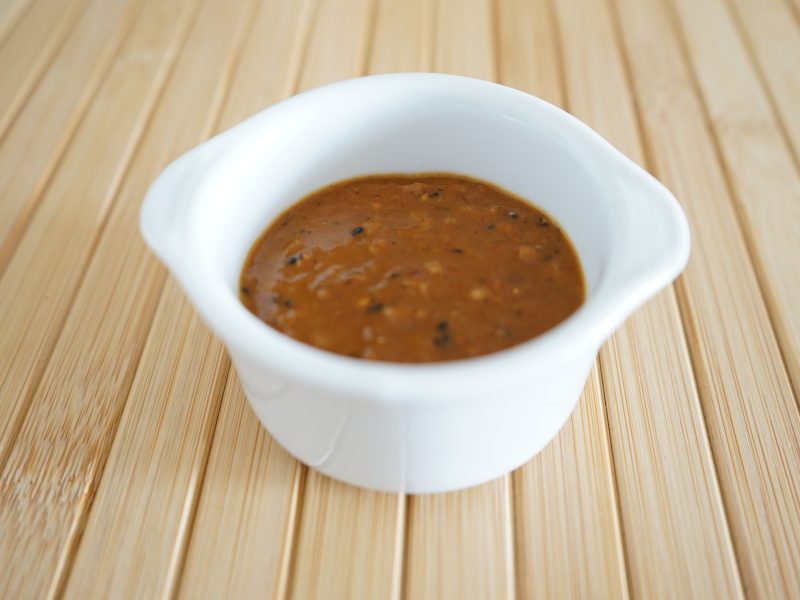
The main ingrediënt of this condiment are Seabuckthorn (Hippophae rhamnoides) berries. They have quite an acidic flavor making them suitable for chutney. Seabuckthorn berries are a true superfood. A quick search online shows many application of these berries in health improving products. The berries are rich in vitamin C and caretonoids. Seabuckthorn grows mostly in dune like areas but can sometimes also be found in more urban areas. We recommend to wear gloves when picking the berries because the berry bush can sting. To add some sweetness to our chutney, we used Chinese dogwood (Cornus kousa Hance) berries. These berries