
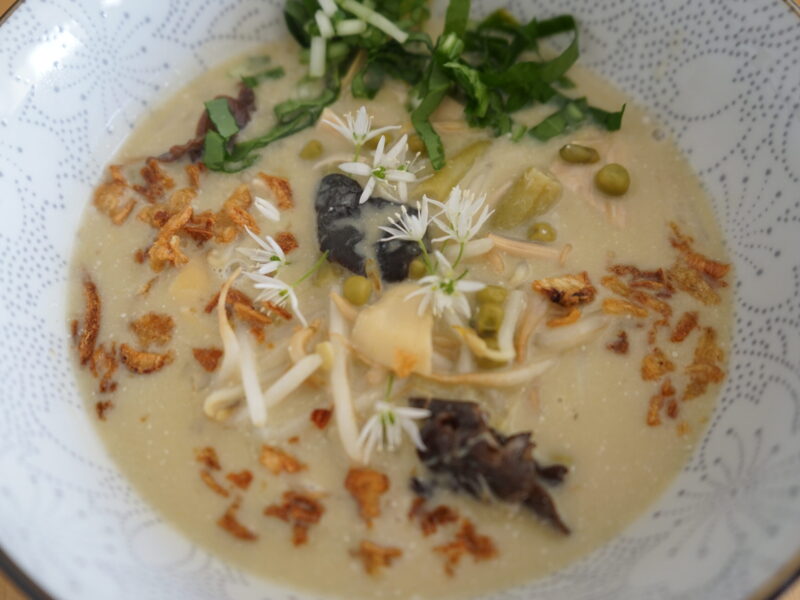
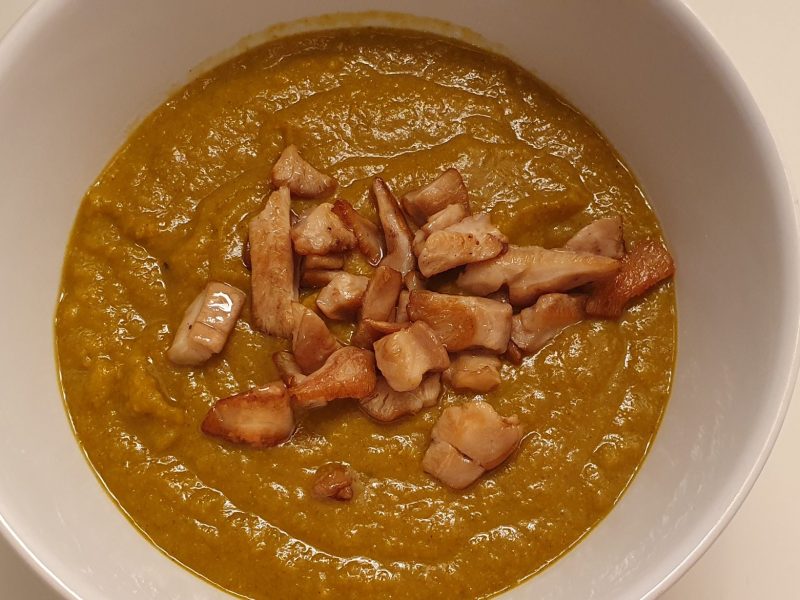
Japanese knotweed is an excellent spring vegetable for soup. Two years ago, we made a more filling ground elder-Japanese knotweed soup topped with St. George mushrooms. In this year’s recipe, we combined Japanese knotweed with coconut milk, creating a light, creamy, curry-like, fresh soup. We combined Japanese knotweed with seasonal fresh greens and added dried wood ears, saved during the winter season. For more recipes, see here.
Category: Ground elder
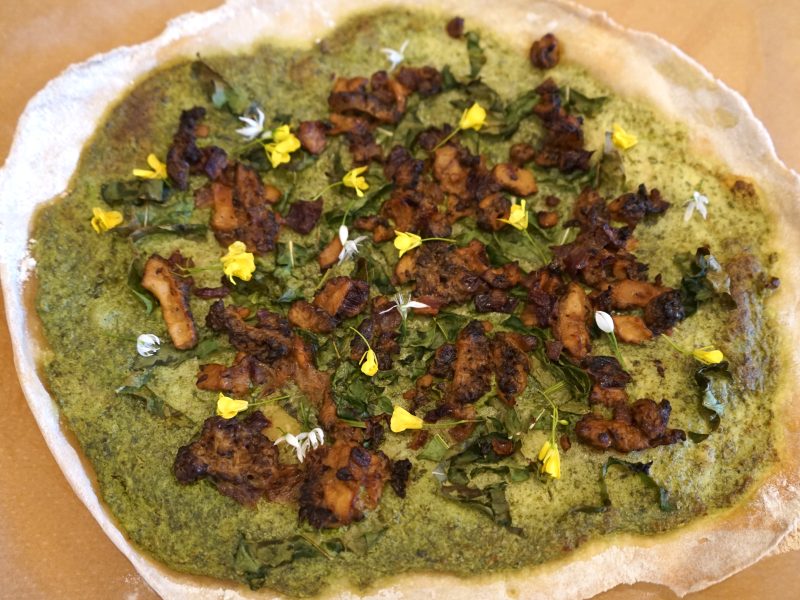
Tarte flambée or Flammkuchen is a type of flatbread with toppings that originated from Alsace. It is reminiscent of Italian pizza but tarte flambée dough does not contain yeasts. Tarte flambée can have a variety of toppings. The most well-known is the one with bacon, onion, and crème fraîche. This recipe was inspired by the Forestière variety of tarte flambée with mushrooms as a topping. Arguably the holy grail of mushrooms of the spring season are morels (Morchella). They have a very short season from late March until May (in Europe). Morels are a family of mushrooms with different subvarieties.
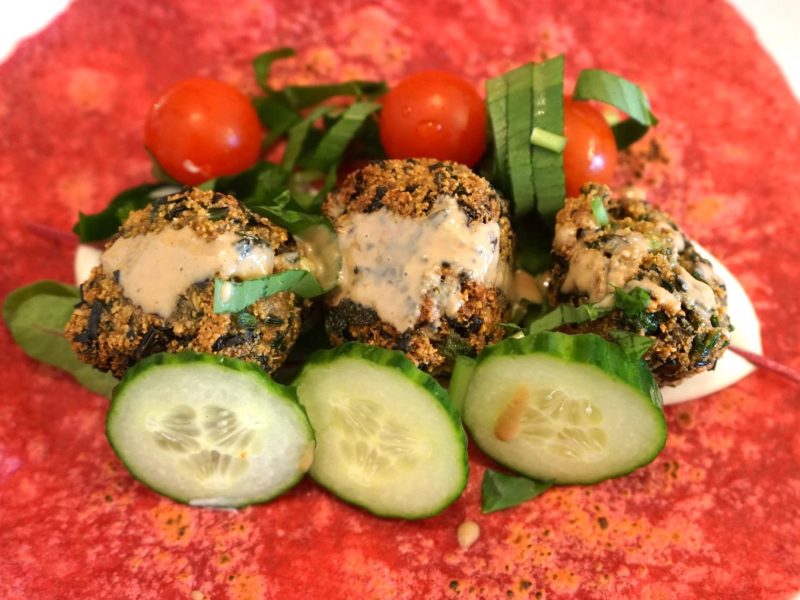
Falafels are balls made of soaked and ground chickpeas or broad beans originating from Middle Eastern cuisine. They are usually deep-fried. They can be eaten as a snack or served as part of a meal, for example on pita bread or in a wrap, with vegetables and sauce. Typically falafels are seasoned with parsley, onion, and garlic. All these plants can be replaced with wild counterparts: ground elder (Aegopodium podagraria), crow garlic (Allium vineale), and wild garlic (Allium ursinum).
Bladder wrack Boletus Crow garlic Fall Garlic mustard Giant puffball Ground elder Main course Stinkhorn Water pepper Wild garlic
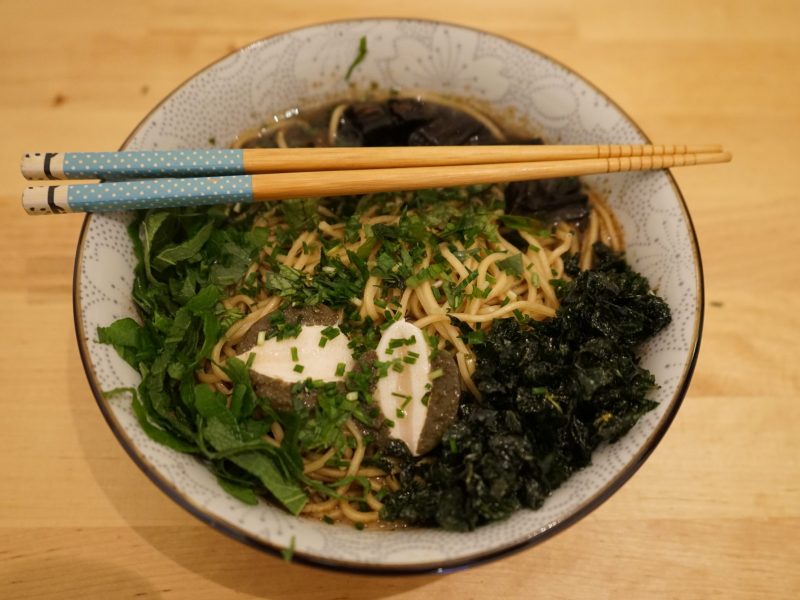
Wild Ramen with black garlic oil
Ramen can be seen as a combination of 5 elements: broth, flavoring (tare), flavored oil, noodles, and toppings (for example egg, nori, greens). Aside from the noodles, we used wild ingredients for all elements. Starting from the stock, we used bladderwrack seaweed (Fucus vesiculosus) (introduced here) and boletus mushroom. We imitated miso based tare with koji fermented puffball (Calvatia gigantea) paste (described here). For the flavored oil, we used black wild garlic (Allium ursinum) and crow garlic (Allium vineale) oil (described here). For the toppings, we used fried ground elder (Aegopodium podagraria), which structure wise resembles nori, crow garlic, water

Strictly speaking, gravy is a meat-based sauce. In this recipe, we make a vegetarian version based on wild ingredients. The main components are cooking liquid of dried mushrooms and roasted chicory (Cichorium intybus) root. Chicory root has been used during various periods of economic crisis as a coffee substitute. The resulting coffee substitute is also used in cajun cooking to create a gravy by deglazing a pan after frying ham. For additional flavoring, we used dried yarrow (Achillea millefolium) powder, which has a nutmeg-like taste and fresh ground elder (Aegopodium podagraria) leaves, which add a carrot / parsley-like flavor. To
The two stars of this recipe are ground elder (Aegopodium Podagraria) and Japanese knotweed (Reynoutria japonica). Ground elder was spread around Europa by Roman soldiers. They use it as a spice. Nowadays, this plant is considered as an invasive weed. Despite being a nuisance to gardeners, ground elder has medical properties and can help treat gout and arthritis. We described Japanese knotweed here. Ground elder (Aegopodium Podagraria) leaves (left) and blooming plant (right). The inspiration for this soup was a rhubarb-carrot soup recipe. We replaced rhubarb with Japanese knotweed and carrot with ground elder. To add sweetness we used sweet potatoes and to