
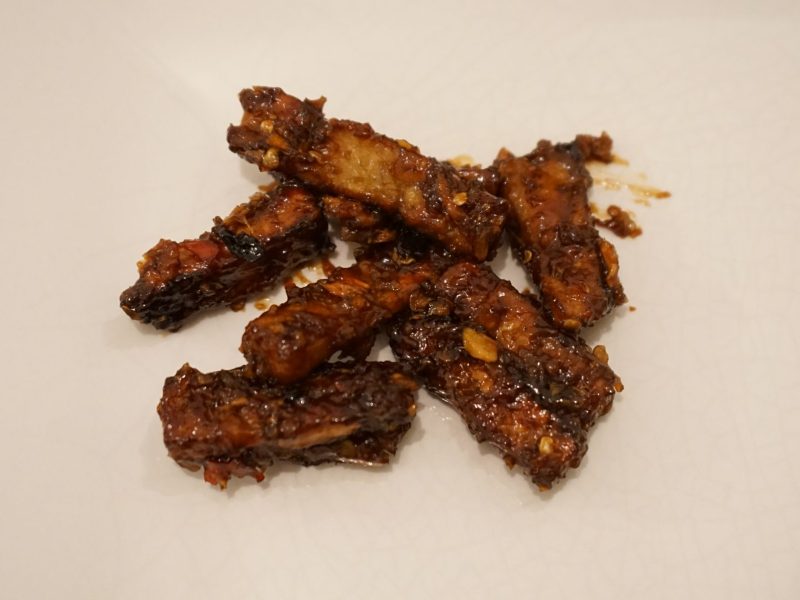
Tempeh is a traditional Indonesian food consisting of fermented beans. The most well-known variety is made from soybeans fermented with the fungus Rhizopus oligosporus. The fungus forms a thick white layer of mycelium around the beans during the fermentation process which transforms the separate beans into a single block. The fungus can grow on a variety of legumes, nuts, and seeds. To make a wild tempeh, we initially tried using beech nuts (Fagus sylvatica) which had some degree of success (we successfully inoculated the nuts) but it was hard to remove most of the inner skin of the nuts which
Category: Chestnut

In this recipe, we utilized the black garlic oil and puffball paste from our previous recipes to create an umami chestnut (Castanea sativa) filling that can be used in many dishes. You can find some examples of serving suggestions below this recipe. In many countries, edible chestnuts are commercially available in the fall. In the wild, you can find edible chestnuts and poisonous ones (Aesculus hippocastanum). The poisonous chestnuts can be used to produce soap. Care should be taken to not confuse these two chestnut varieties. Luckily they are quite easy to distinguish. We summarised key differences in the table