Tempeh is a traditional Indonesian food consisting of fermented beans. The most well-known variety is made from soybeans fermented with the fungus Rhizopus oligosporus. The fungus forms a thick white layer of mycelium around the beans during the fermentation process which transforms the separate beans into a single block.
The fungus can grow on a variety of legumes, nuts, and seeds. To make a wild tempeh, we initially tried using beech nuts (Fagus sylvatica) which had some degree of success (we successfully inoculated the nuts) but it was hard to remove most of the inner skin of the nuts which likely limited mycelial growth.
Next, we tried chestnuts (Castanea sativa) which are in the same family as beech nuts and much more easy to peel. This time the result was amazing.
The process of making tempeh is not that complicated. The main steps are cooking and peeling (if required) your base legume / nut / grain. Then, it needs to be mixed with vinegar to create a suitable pH environment for the tempeh fungus. Next, it is mixed with a tempeh starter and put in some type of container with holes in it for proper air circulation. It is then put into a food dryer at 30 degrees Celsius for 24 hours for initial colonization. Finally, the tempeh needs to colonize further at room temperature for another 24 up to 48 hours.

Chestnut tempeh
Equipment
- 1 Food dryer
- 1 Freezer bag
- 1 cooking pot
- 1 Table spoon
- 1 bowl
Ingredients
- 1 tbsp Rice vinegar
- 1 tbsp Tempeh starter
- 200 grams Chestnuts
Instructions
- Cook and peel the chestnuts according to the steps
this recipe. - Crumble to chestnuts and transfer them to a bowl.
- Add the rice vinegar and mix well.
- Add the tempeh starter and mix well.
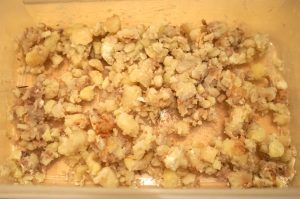
- Take a small freezer bag and poke holes in it using a fork. There should be holes distributed evenly throughout the whole bag. Transfer the mixture to the bag.

- Put the bag in a food dryer set to 30℃ for 24 hours. Make sure the temperature is not higher than 30℃ as this would kill the fungus.

- After 24 hours you should see a white layer forming around the chestnuts. You can put the the tempeh at room temperature at this point or keep it in the food dryer at 20℃.

- After another 24 up to 48 hours the fungus should have formed a thick cake and the tempeh is now ready to be consumed. Don't be alarmed about any black spots on your tempeh. These are spores forming and safe to eat.

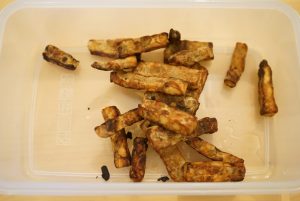
- Be sure to not consume it raw as home made tempeh is not as sterile as the store bough tempeh, which in principle could be eaten raw. You can for example pan fry your tempeh.
Notes