
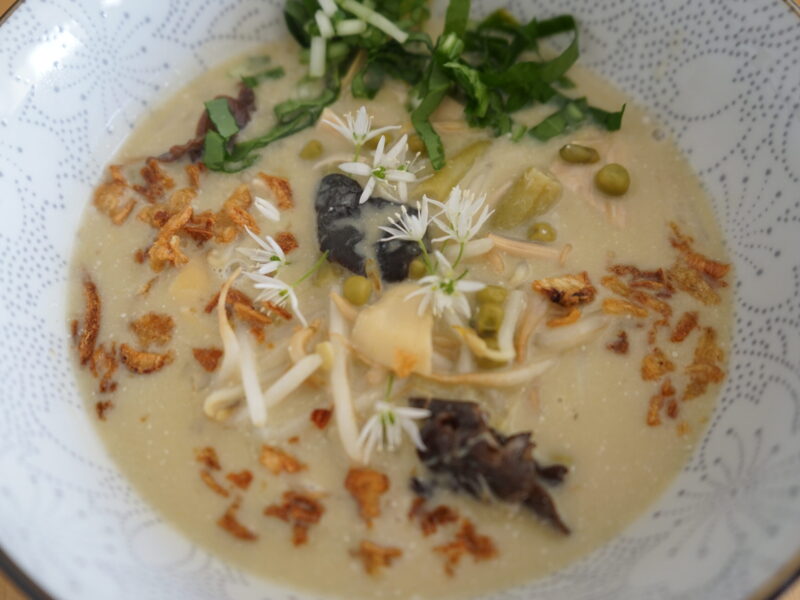
Japanese knotweed is an excellent spring vegetable for soup. Two years ago, we made a more filling ground elder-Japanese knotweed soup topped with St. George mushrooms. In this year’s recipe, we combined Japanese knotweed with coconut milk, creating a light, creamy, curry-like, fresh soup. We combined Japanese knotweed with seasonal fresh greens and added dried wood ears, saved during the winter season. For more recipes, see here.
Category: Plants
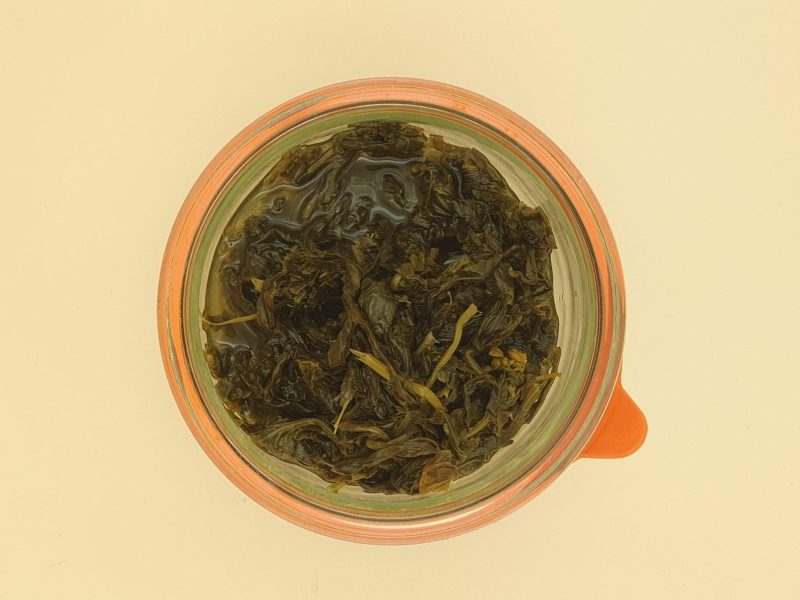
Saurkraud is a popular ingredient in many Easter European dishes. It can be used as a base for soups or as a dumpling filling. Saurkraud is made of fermented cabbage. The cultivated cabbage belongs to the same Brassica family as the black mustard (Brassica nigra) and wild (field) mustard (Brassica arvensis). Wild Brassicas have a stronger taste than their cultivated cousins, with noticeable mustard and broccoli flavors (broccoli belongs to the same family). They can be fermented in the same way as cultivated cabbage. You can use the fermented mustard in many ways, for example, together with mushrooms as a
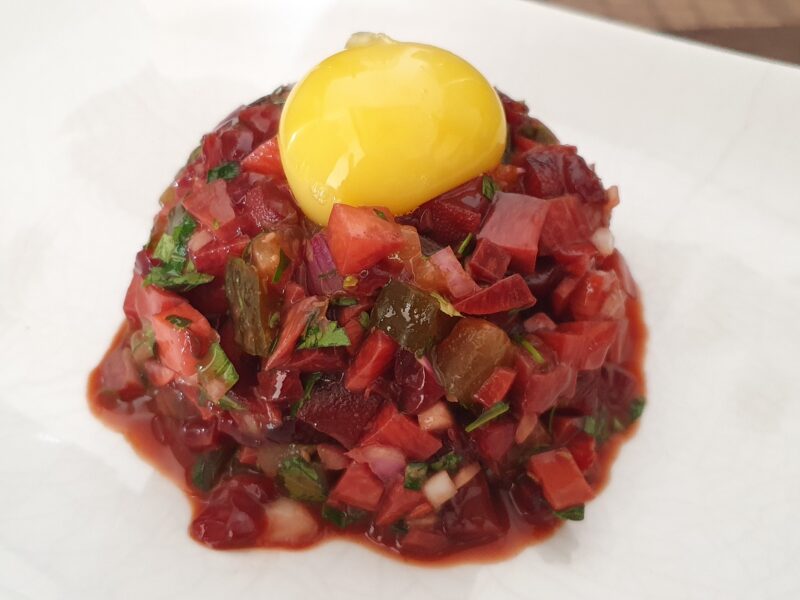
Not many mushrooms are good edibles raw. The beef steak mushroom (Fistulina hepatica), however, is one of the few that is. Because it has a meaty texture and look, it is a perfect mushroom to turn into a steak tartar. The original steak tartare is made with finely chopped raw beef, and has its origin in late 19th-century French cuisine. We swapped the beef for a beef steak mushroom and were very happy with the result! For a further wild twist, we replaced pepper with waterpepper (Persicaria hydropiper) and instead of using Worcester sauce, we used the liquid we had
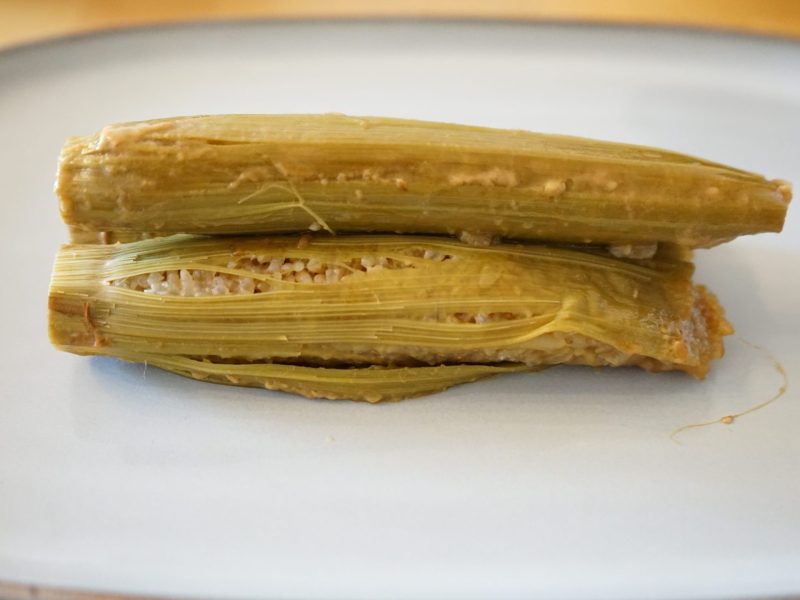
The taste of the oven-baked rice with apples dish brings back childhood memories. This simple Polish dish was an inspiration for this recipe. The fruit flavor of Japanese knotweed (Reynoutria japonica) combined with rice and cinnamon resembles the childhood favorite quite well. Knotweed also has a perfect structure to be filled with something. Knotweed shoots consist of hollow pipes connected with “joints”. Through the process of long baking, the aroma and flavour of the plant soaks into the rice and makes it irresistible. Rice desserts are very popular in many countries in the world. For example, Khao tom mud is
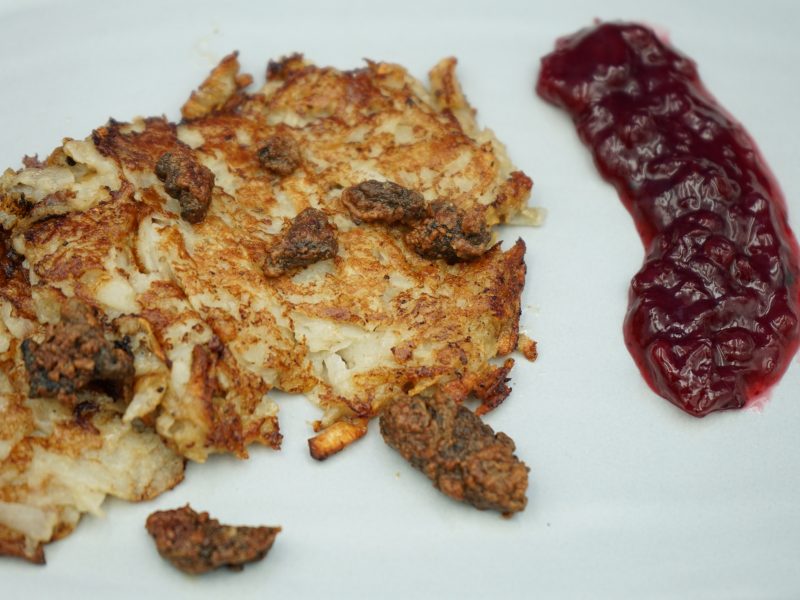
Many countries have their version of potato pancakes and so does Sweden where they call it “Raggmunk”. In Sweden, they are typically served with bacon and lingonberry jam, which we both replaced by wild counterparts for which we already posted recipes previously. We replaced potatoes with Jerusalem artichokes, which are less starchy so this recipe requires a bit more flour then usual to achieve the right binding. In our first batch, we didn’t adjust yet and found out that increasing the amount of flour by 10% resulted in the perfect binding.
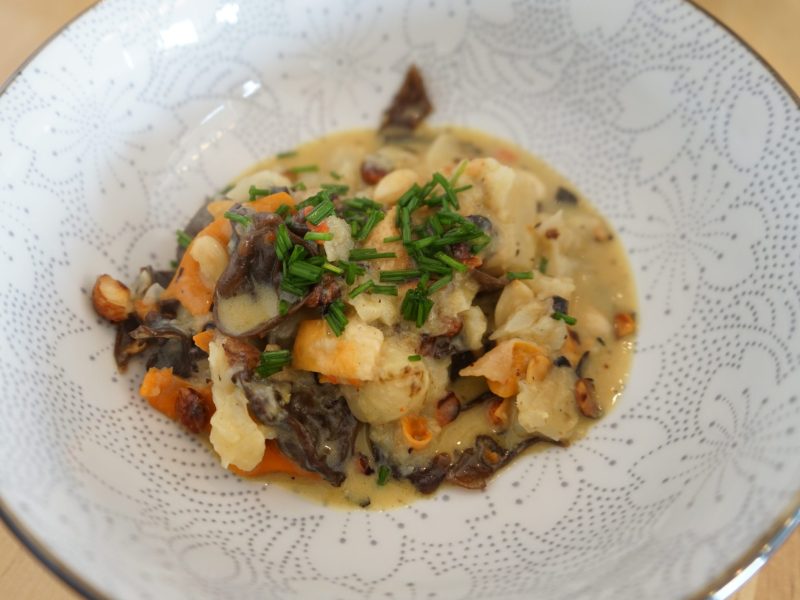
Massaman curry is a famous Thai curry that has been ranked number one in the CNN travel best food of the world ranking. There is some debate about the origin of this dish. The most widely accepted origin story is that this dish has Persian roots. This follows from the name of the dish and its ingredients. The word Massaman could be derived from the old Persian word for Muslim. The dish contains spices that are not common in other Thai curries and the trade in these spices was in the past dominated by Muslims. Key components of this dish

In this recipe, we made truly fermented pickles using wild aromatics. Most pickles, you can buy in shops, are not fermented but pickled using vinegar, which has its place, but gives a different flavor profile. In Eastern Europe, fermented pickles are strongly preferred and used as an ingredient, for example, in pickle soup (see serving suggestions). Typical aromatics added to pickles when fermenting are mustard seeds, horse radish, garlic, dill, and kale leaves. We found mustard (Sinapis arvensis) seeds in the wild. The other ingredients we substituted with garlic mustard (Alliaria petiolata) root, wild garlic (Allium ursinum) bulbs, hogweed (Heracleum
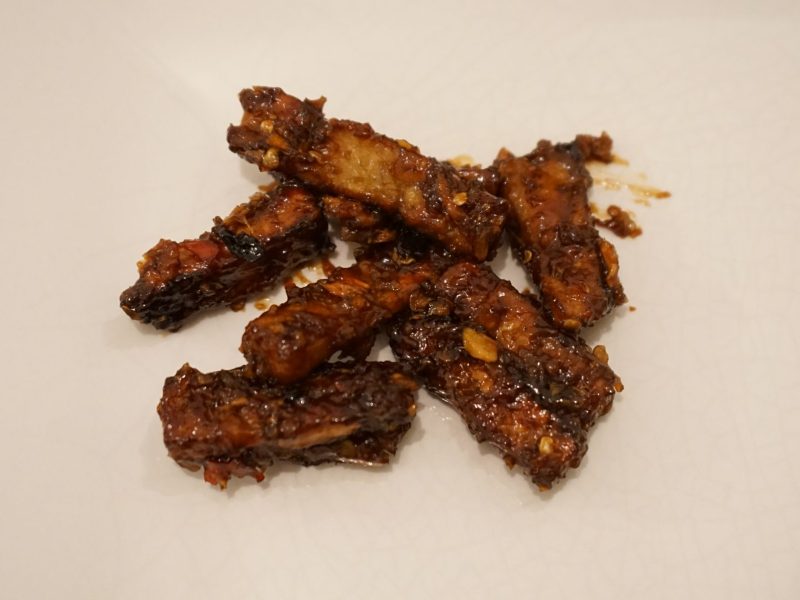
Tempeh is a traditional Indonesian food consisting of fermented beans. The most well-known variety is made from soybeans fermented with the fungus Rhizopus oligosporus. The fungus forms a thick white layer of mycelium around the beans during the fermentation process which transforms the separate beans into a single block. The fungus can grow on a variety of legumes, nuts, and seeds. To make a wild tempeh, we initially tried using beech nuts (Fagus sylvatica) which had some degree of success (we successfully inoculated the nuts) but it was hard to remove most of the inner skin of the nuts which
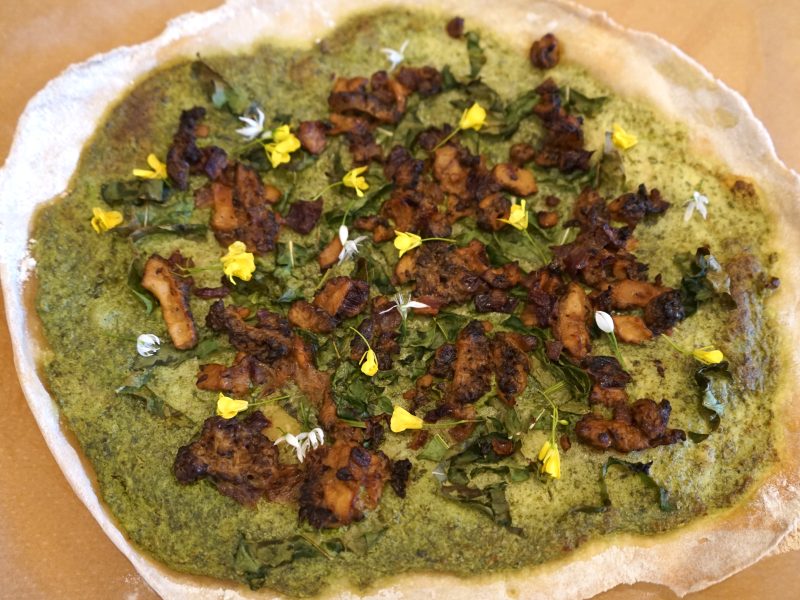
Tarte flambée or Flammkuchen is a type of flatbread with toppings that originated from Alsace. It is reminiscent of Italian pizza but tarte flambée dough does not contain yeasts. Tarte flambée can have a variety of toppings. The most well-known is the one with bacon, onion, and crème fraîche. This recipe was inspired by the Forestière variety of tarte flambée with mushrooms as a topping. Arguably the holy grail of mushrooms of the spring season are morels (Morchella). They have a very short season from late March until May (in Europe). Morels are a family of mushrooms with different subvarieties.
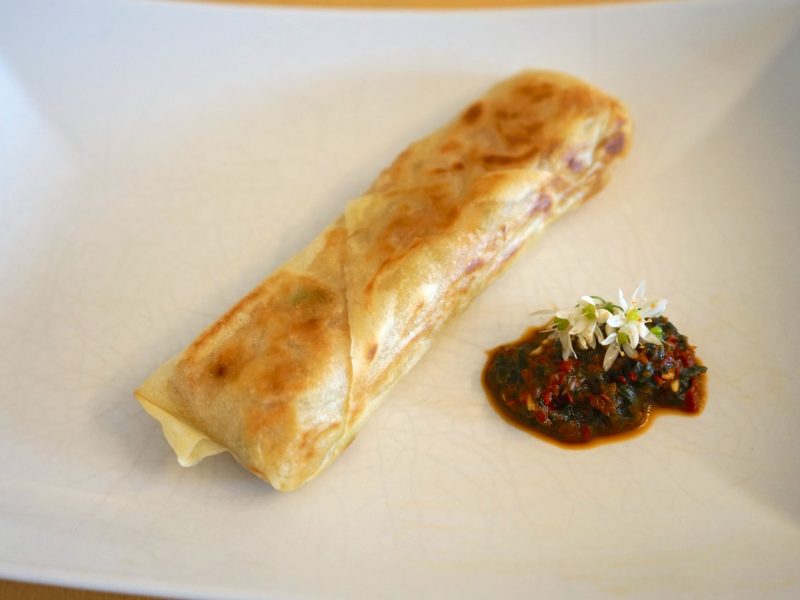
Sambal is a spicy condiment from Indonesian and Malaysian cuisine. It consists of ground chilies and salt with optionally other aromatics and ingredients. We experimented with adding fermented wild garlic to basic sambal, which turned out to be a match made in heaven. Once prepared, the sambal can be kept for a long time in the fridge.