
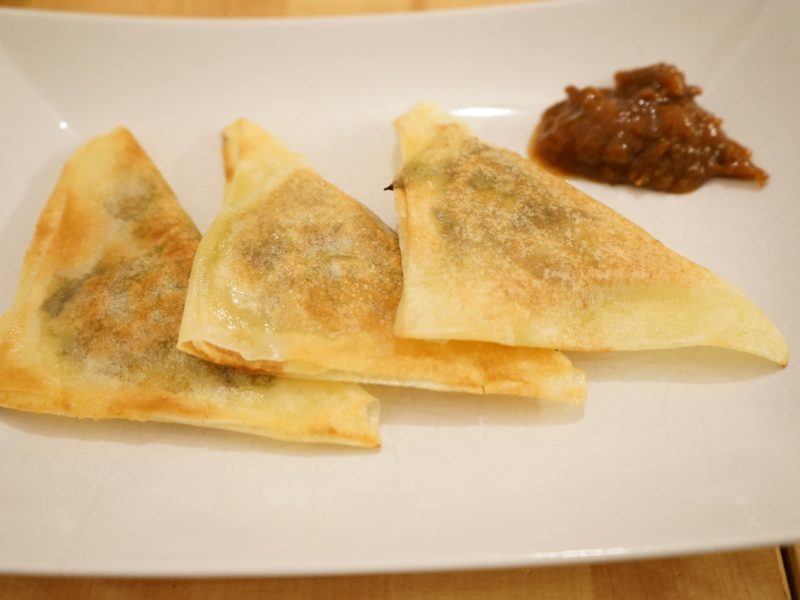
Ka lei kok is a Chinese snack and it literally translates to “Curry triangle”. Usually, it is made with chicken but in this recipe we substitute the chicken with a mix of two winter mushrooms: the Oyster mushroom (Pleurotus ostreatus) and the Velvet shank (Flammulina velutipes) also (not entirely accurately) called Enoki. Both mushrooms can be found on dead and decaying wood. Velvet shank (Flammulina velutipes) left, Oyster mushroom (Pleurotus ostreatus) right. The oyster mushroom, which you can find in the wild during winter, is a closely related mushroom to the one found in the supermarket. The main difference between
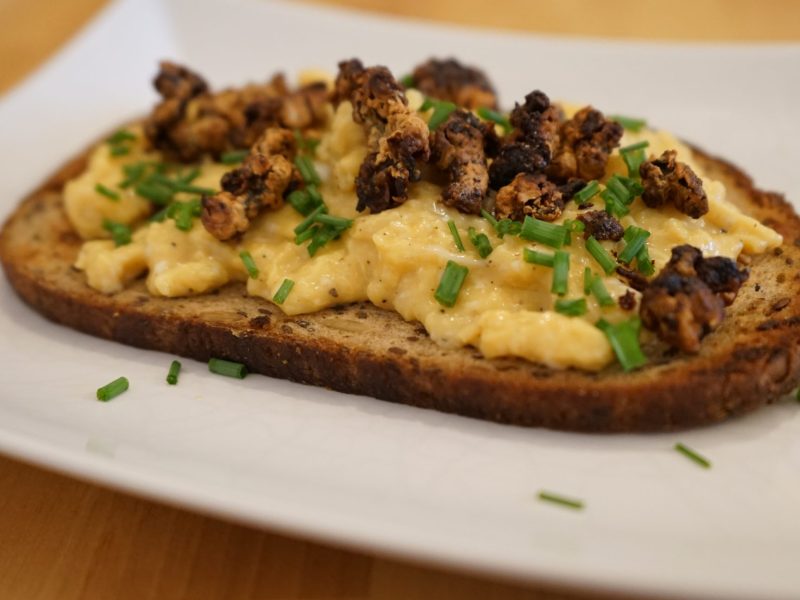
This recipe is about doing something creative with a bit of an obscure winter mushroom: Black Witch’s butter (Exidia glandulosa). It is not exactly known as a mushroom with high culinary value, it can however be used to create a vegan bacon substitute. Its neutral taste and soft texture lend it self well for this application. The mushroom can be found all year round, mostly on oak trees. However, the ideal season for it is in the winter, when there is not much else. Black Witch’s butter can survive frost as you ca see on the picture below. Black Witch’s
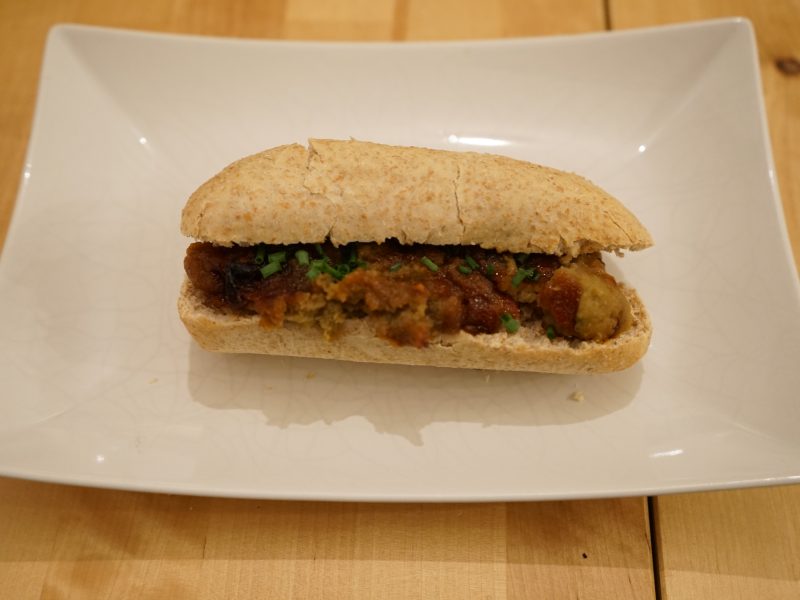
Pom is a Surinamese casserole made from the roots of pomtajer (Xanthosoma sagittifolium) with pieces of chicken, flavored with citrus juice, celery, and stock cubes. It originates from a potato-based dish introduced by European Jews, who came to Surinam in the 17th century. Pom is typically made on special occasions such as holidays or birthdays. Perhaps, this is due to practical reasons because, with a cooking time of around two hours, it is not exactly a quick dish. Pom is most often served with white rice or on a sandwich. We made a wild and vegan adaptation of this dish

Mushroom-sauerkraut dumplings are one of the most iconic Christmas foods in Poland. They are usually eaten during Christmas Eve dinner. Dumplings’ filling is made of some type of boletus mushroom (porcini (Boletus edulis) is the most valued) and sauerkraut. The stock you get as a result of cooking the mushrooms is often used as a base for a Chrismas mushroom soup. We used the mushroom stock for a wild Jerusalem artichoke soup.
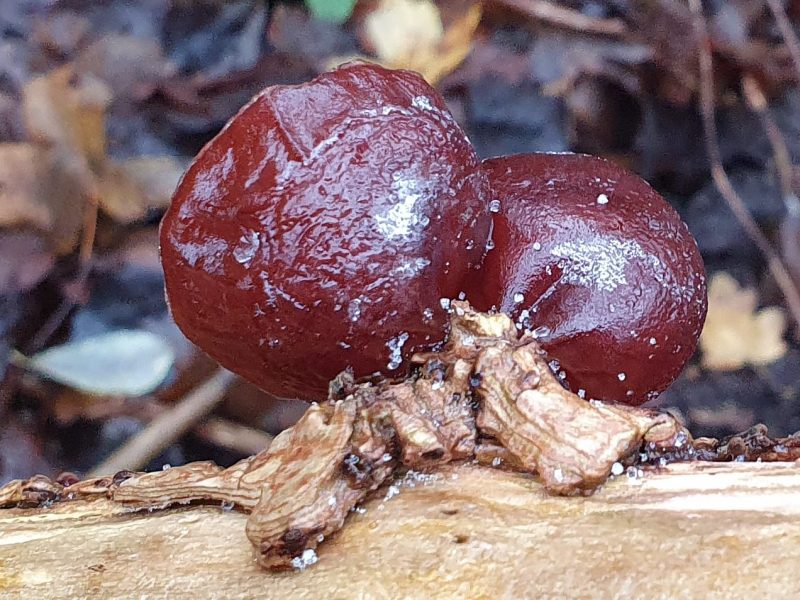
Wood ears (Auricularia auricula-judae) are mushrooms that can be found all year round, mostly when there has been a lot of rain fall. They grow on dying and dead tree part and have a preference for elder trees. Historically, in the west, they were never considered an edible mushroom however in Asia they have been eaten for centuries. In this recipes, we incorporate them in spring rolls. Spring rolls are a snack typically found in most Asian restaurants in the West. They originated from China and there are many varieties. The version we describe here is a Chinese style fried

With this recipe, we recreated a wild vegan version of a Dutch classic: the herring sandwich. The combination of fermented herring with onions and pickles dates back to the Jewish community of Amsterdam. They sold this trinity as a street food. Nowadays, you can find the herring special everywhere in the Netherlands in fish shops and at food stands as a topping for a sandwich. To give this dish a wild twist, we replaced the herring with fermented shaggy inkcap mushrooms (Coprinus comatus), the onions with crow garlic (Allium vineale) bulbs, and the pickles with quick pickled hogweed (Heracleum sphondylium)

Quince (Cydonia oblonga) is a bush sometimes used by city planners to fill hedges. Therefor your best bet of finding it is to pay attention to hegdes in the city. In the late fall to winter it will produce peer-like fruits with a very distinctive tangy taste to it. They work great as a base for chutney. They are ripe when they turn yellow. A good amount of sugar is required to balance out the acidity of the quince. This chutney works well with any dish that’s served with other types of chutneys.

In this recipe, we utilized the black garlic oil and puffball paste from our previous recipes to create an umami chestnut (Castanea sativa) filling that can be used in many dishes. You can find some examples of serving suggestions below this recipe. In many countries, edible chestnuts are commercially available in the fall. In the wild, you can find edible chestnuts and poisonous ones (Aesculus hippocastanum). The poisonous chestnuts can be used to produce soap. Care should be taken to not confuse these two chestnut varieties. Luckily they are quite easy to distinguish. We summarised key differences in the table
Bladder wrack Boletus Crow garlic Fall Garlic mustard Giant puffball Ground elder Main course Stinkhorn Water pepper Wild garlic
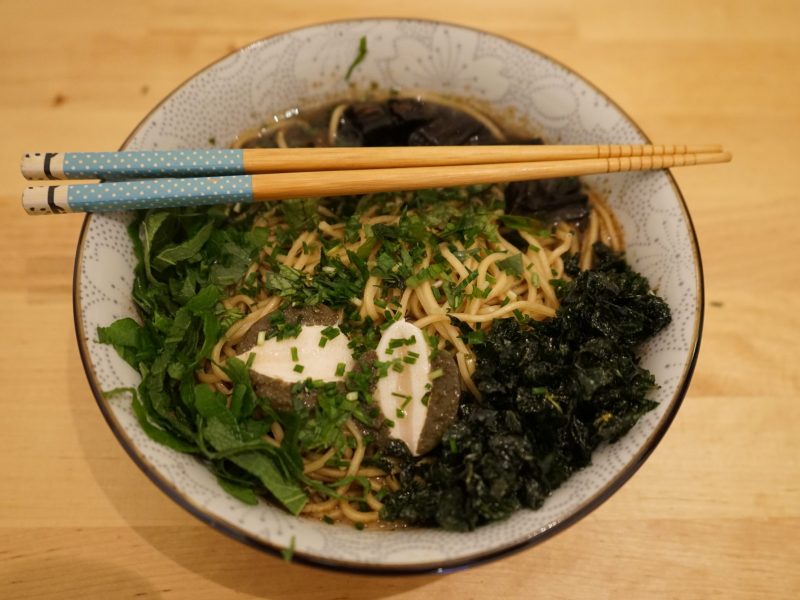
Wild Ramen with black garlic oil
Ramen can be seen as a combination of 5 elements: broth, flavoring (tare), flavored oil, noodles, and toppings (for example egg, nori, greens). Aside from the noodles, we used wild ingredients for all elements. Starting from the stock, we used bladderwrack seaweed (Fucus vesiculosus) (introduced here) and boletus mushroom. We imitated miso based tare with koji fermented puffball (Calvatia gigantea) paste (described here). For the flavored oil, we used black wild garlic (Allium ursinum) and crow garlic (Allium vineale) oil (described here). For the toppings, we used fried ground elder (Aegopodium podagraria), which structure wise resembles nori, crow garlic, water
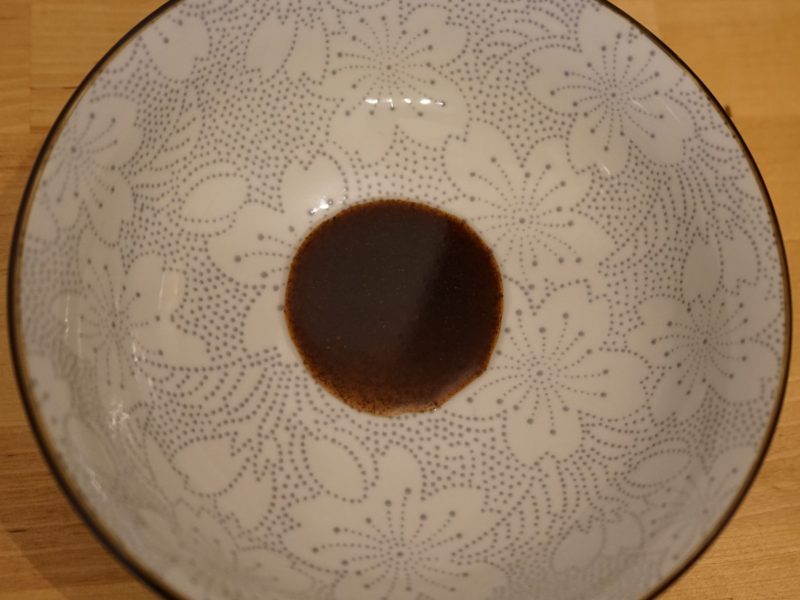
In this recipe, we show another application of wild garlic bulbs. We use two types of garlic: wild garlic (allium ursinum) and crow garlic (allium vineale). At the time when we made this recipe (fall), wild garlic doesn’t have any parts that grow above the ground so you would have dig up the bulbs from a known spot. In contrast, crow garlic does have leaves that grow above the surface at this time, although they can be a bit hard to spot between the grass. We used the bulbs of both plants to create Japanese black garlic oil, which is