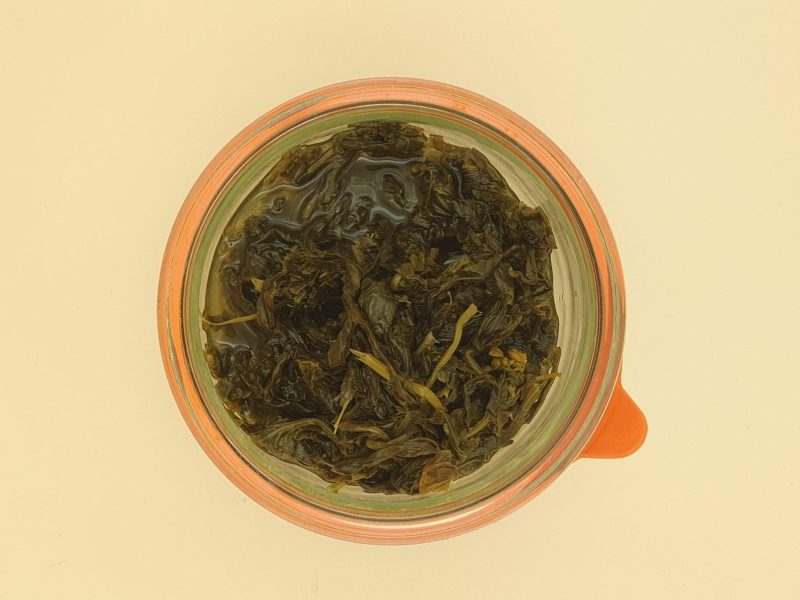
Japanese knotweed (Reynoutria japonica) is both botanically and culinary closely related to rhubarb. In Japan, it is categorized as “sansai” which translates to mountain vegetables. It is also considered as one of the worst invasive species worldwide as its deep strong roots which are hard to remove are capable of destroying infrastructure.
In the kitchen the stems can be used in similar ways as rhubarb as long as its harvested when the stems are not too hard and fibrous. This is in early spring.
Both rhubarb and Japanese knotweed contain oxalic acid which is not too healthy but as long as its eaten in moderate quantities it should not form a hazard.
Japanese knotweed lends itself very well to be used in tangy sauces such as this chutney.

Japanese knotweed chutney
Servings: 2 people
Equipment
- 1 Knife
- 1 cutting board
- 1 cooking pot
- 1 Stick blender
Ingredients
- 150 grams Soft knotweed stems
- 1 Red onion
- 1 Red pepper Remove seeds for a milder chutney
- 1 Small piece of ginger
- 1 tbsp Wild garlic seeds Can be replaced by regular garlic, in which case it should be cooked with the other aromatics
- 1 tbsp Curry powder
- 1 Clove
- 1 tbsp Honey
- 2 tbsp Apple cider vinegar
- 1 tsp Salt
- Oil for frying
- Corn starch Optional for thickening
- Wood ear mushroom powder Optional for thickening
Instructions
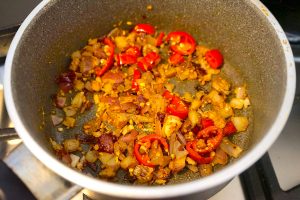
- Chop onion, pepper and ginger in small pieces, put the wild garlic seeds in a separate cup.

- Fry onion, pepper, and ginger in oil in a saucepan until soft.
- Turn down the heat and add clove and curry powder and temper for a minute or so.
- Add chopped knotweed stems and enough water to cover.
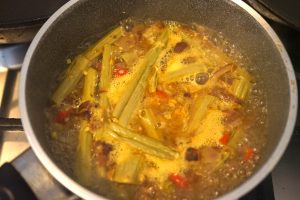
- Boil on medium heat until knotweed pieces are soft. Use a stick blender to blend the mixture into a sauce.
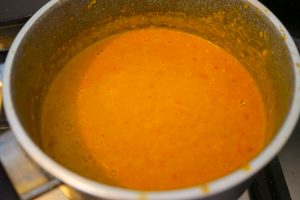
- At this point, you can boil the sauce down to a thicker consistency or add cornstarch to water for thickening. We used powder from wood ear mushrooms which work well for thickening without adding any aroma.
- Season the mixture with salt, vinegar and honey. Add the wild garlic seeds as a garnish on top.
Notes
We used this as a condiment for Indian pancakes as seen in the feature picture of this post.