
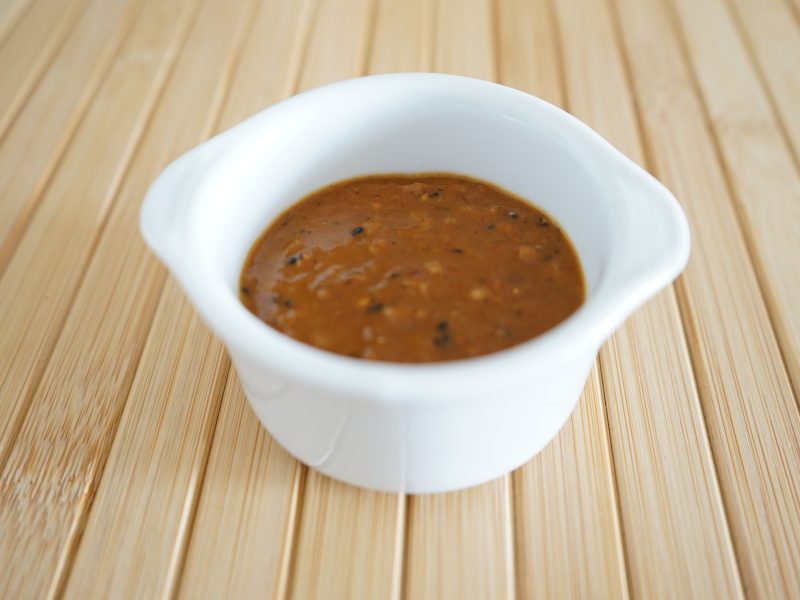
The main ingrediënt of this condiment are Seabuckthorn (Hippophae rhamnoides) berries. They have quite an acidic flavor making them suitable for chutney. Seabuckthorn berries are a true superfood. A quick search online shows many application of these berries in health improving products. The berries are rich in vitamin C and caretonoids. Seabuckthorn grows mostly in dune like areas but can sometimes also be found in more urban areas. We recommend to wear gloves when picking the berries because the berry bush can sting. To add some sweetness to our chutney, we used Chinese dogwood (Cornus kousa Hance) berries. These berries
Category: Fall

With an excess of Giant Puffballs (Calvatia gigantea) around, we were thinking of a way to do something with them that can be stored for a longer time. Inspired by recent success in making miso paste from scratch, we decided to use the same procedure for fermenting puffballs. Initially the result was not quite like miso but after about two months the taste was getting quite similar to miso. Miso paste (like many other fermented foods) is made using a fungus called Koji (Aspergillus oryzae). You can isolate Koji from store-bought vegetables if you feel like doing everything from scratch.
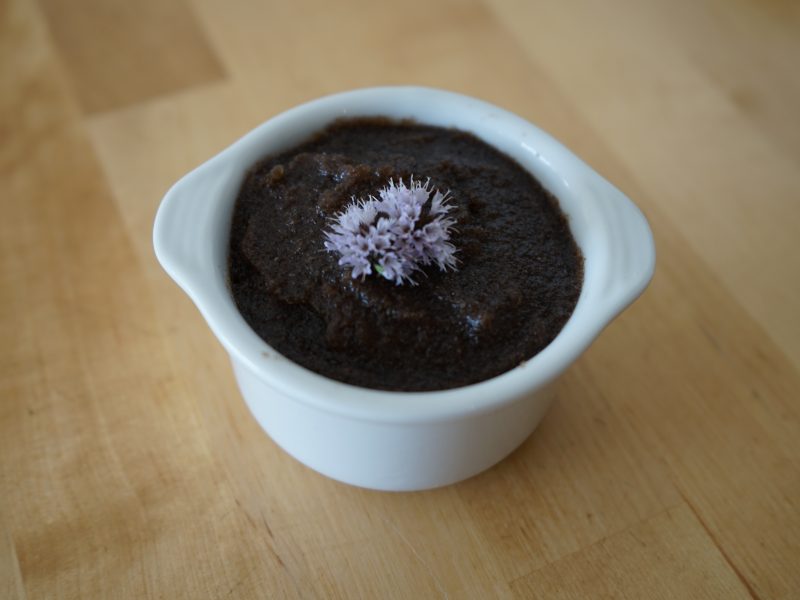
In this recipe, we make a mint-flavored jelly using wild water mint (mentha aquatica) and woodear mushrooms (auricularia auricula-judae) for gelatinization. Water mint is just one of the many kinds of wild mints. As its name suggests can be found close to water. It has purple flowers, which have a ball-like shape. Watermint (mentha aquatica) left and wood ear (auricularia auricula-judae) right Wood ears are amazing mushrooms. They are commonly used in Chinese cuisine in stir-fry dishes or salads. However, they also grow in Europe for most of the year when its not too warm. As the name suggests they