
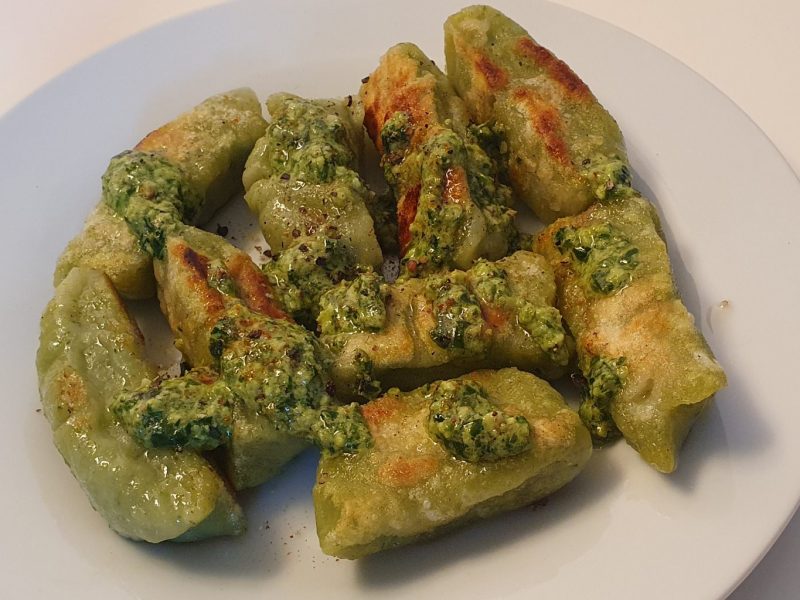
The Jerusalem Artichoke (Helianthus tuberosus), which we already used in several recipes, also called Topinambur is a related plant to the sunflower native to America but can today also be found in many parts of Europe. The plant produces thick roots which can be used like potatoes. They are sweeter than potatoes and the sweetnes increases with the season. They can be picked from fall until early spring. We made gnocchi (or Polish kopytka) out of the last Jerusalem artichoke of this season.
Category: Plants
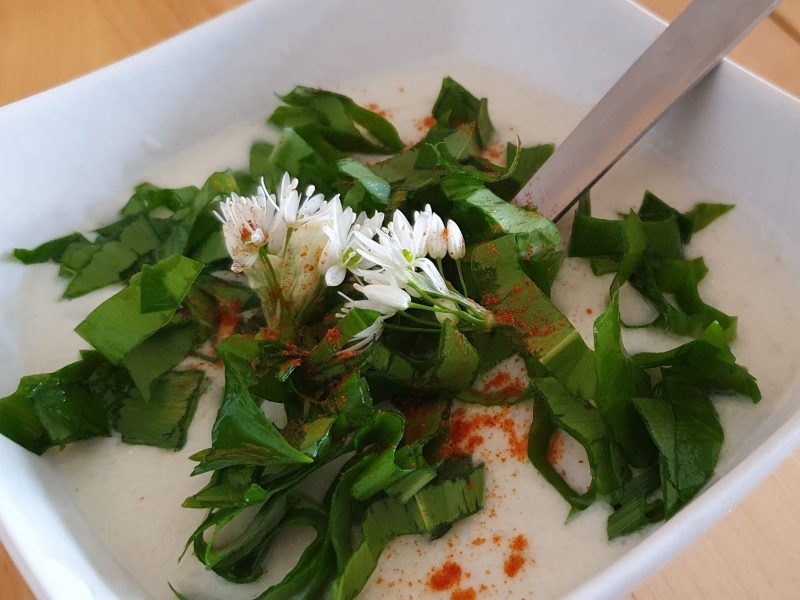
White borscht, traditionally eaten on Easter Sunday morning, is made of fermented flour sour soup base and served with eggs, sausage, and sometimes potatoes and feta cheese. Here we present a wild version of this soup. The traditional white borscht soup base is made of fermented flour (usually wheat or rye) with garlic cloves, bay leaf, and allspice. We chose oat flakes for fermentation as they give a milder flavor and wild garlic instead of garlic cloves. We replaced eggs with stinkhorn eggs and potatoes with Jerusalem artichokes.
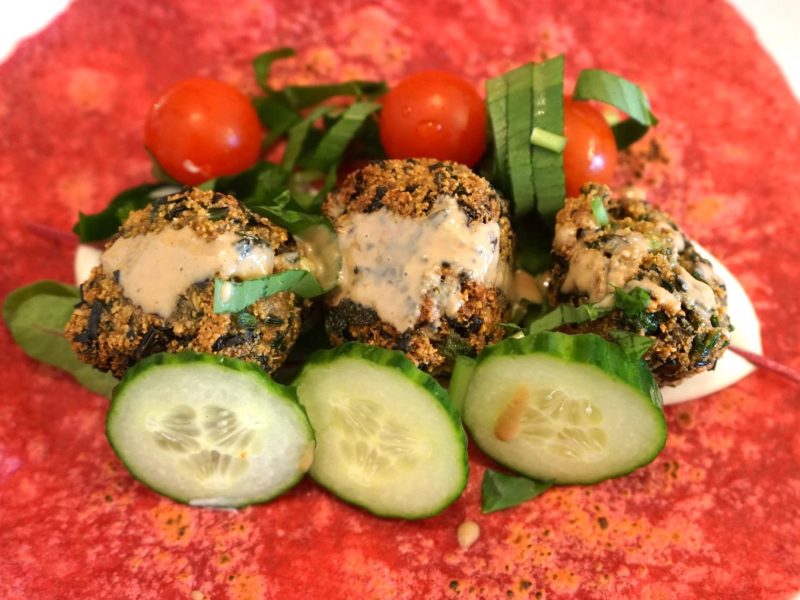
Falafels are balls made of soaked and ground chickpeas or broad beans originating from Middle Eastern cuisine. They are usually deep-fried. They can be eaten as a snack or served as part of a meal, for example on pita bread or in a wrap, with vegetables and sauce. Typically falafels are seasoned with parsley, onion, and garlic. All these plants can be replaced with wild counterparts: ground elder (Aegopodium podagraria), crow garlic (Allium vineale), and wild garlic (Allium ursinum).
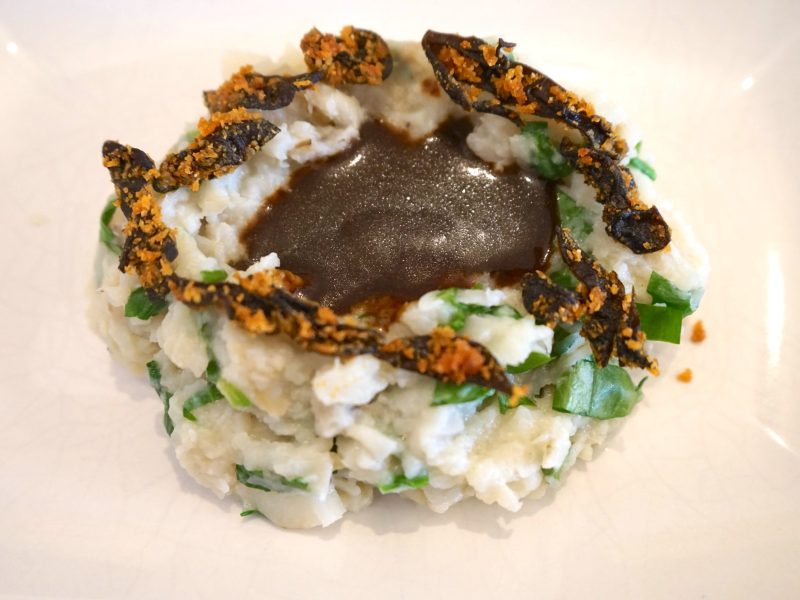
Stamppot is a traditional Dutch dish consisting of mashed potatoes with vegetables, usually some type of leafy greens. In this recipe, we made a wild version of stamppot using mashed Jerusalem artichokes and wild garlic leaves. A classic way to serve this dish is to form a “well” of stamppot filled with gravy in the middle and sprinkled on top with small pieces of crunchy bacon. We used wild versions of vegan bacon and gravy we described in earlier recipes.
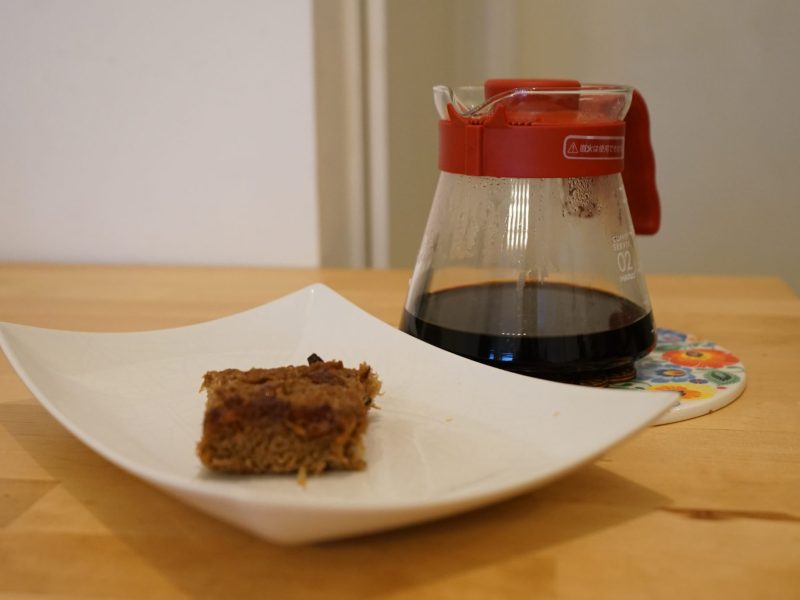
Bojo is a cake which main ingredients are grated cassava root and coconut. Its often eaten on family gatherings and birthdays. Cassava, also known as Jucca, is a popular root vegetable in South America. It is often eaten in savory dishes, similar to how you would use potatoes. But it also works well in cakes because it has some sweetness to it. Cassave used in bojo is grated and because of that it give the cake a unique structure. With an abundance of Jerusalem artichokes (Helianthus tuberosus) in our neighborhood, we tried to come up with creative ways of using
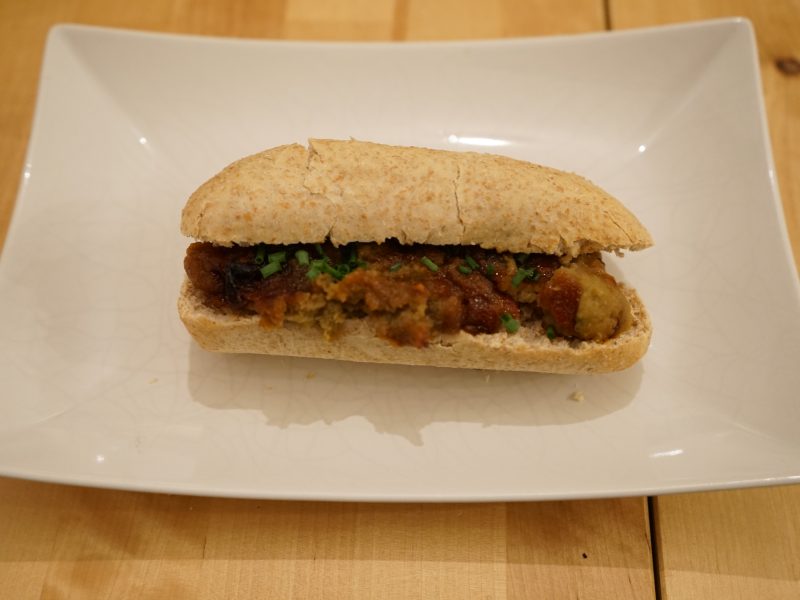
Pom is a Surinamese casserole made from the roots of pomtajer (Xanthosoma sagittifolium) with pieces of chicken, flavored with citrus juice, celery, and stock cubes. It originates from a potato-based dish introduced by European Jews, who came to Surinam in the 17th century. Pom is typically made on special occasions such as holidays or birthdays. Perhaps, this is due to practical reasons because, with a cooking time of around two hours, it is not exactly a quick dish. Pom is most often served with white rice or on a sandwich. We made a wild and vegan adaptation of this dish
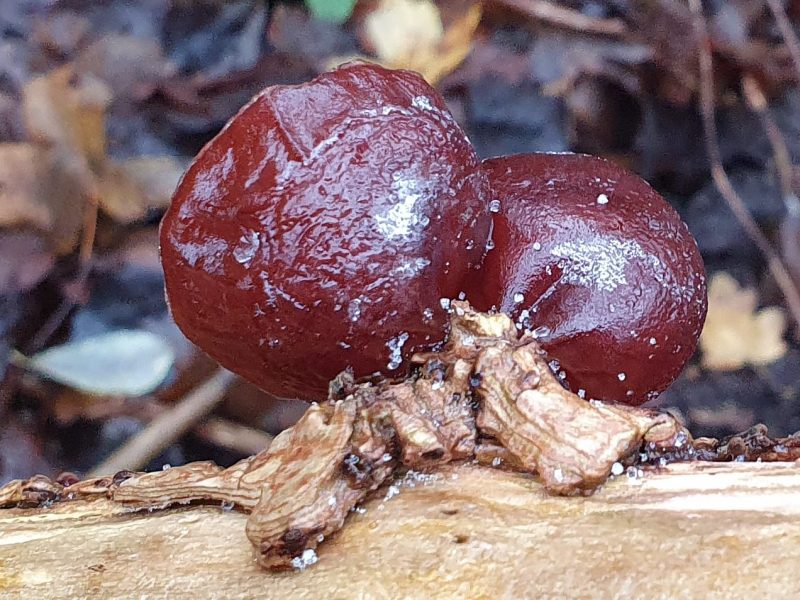
Wood ears (Auricularia auricula-judae) are mushrooms that can be found all year round, mostly when there has been a lot of rain fall. They grow on dying and dead tree part and have a preference for elder trees. Historically, in the west, they were never considered an edible mushroom however in Asia they have been eaten for centuries. In this recipes, we incorporate them in spring rolls. Spring rolls are a snack typically found in most Asian restaurants in the West. They originated from China and there are many varieties. The version we describe here is a Chinese style fried

With this recipe, we recreated a wild vegan version of a Dutch classic: the herring sandwich. The combination of fermented herring with onions and pickles dates back to the Jewish community of Amsterdam. They sold this trinity as a street food. Nowadays, you can find the herring special everywhere in the Netherlands in fish shops and at food stands as a topping for a sandwich. To give this dish a wild twist, we replaced the herring with fermented shaggy inkcap mushrooms (Coprinus comatus), the onions with crow garlic (Allium vineale) bulbs, and the pickles with quick pickled hogweed (Heracleum sphondylium)

Quince (Cydonia oblonga) is a bush sometimes used by city planners to fill hedges. Therefor your best bet of finding it is to pay attention to hegdes in the city. In the late fall to winter it will produce peer-like fruits with a very distinctive tangy taste to it. They work great as a base for chutney. They are ripe when they turn yellow. A good amount of sugar is required to balance out the acidity of the quince. This chutney works well with any dish that’s served with other types of chutneys.

In this recipe, we utilized the black garlic oil and puffball paste from our previous recipes to create an umami chestnut (Castanea sativa) filling that can be used in many dishes. You can find some examples of serving suggestions below this recipe. In many countries, edible chestnuts are commercially available in the fall. In the wild, you can find edible chestnuts and poisonous ones (Aesculus hippocastanum). The poisonous chestnuts can be used to produce soap. Care should be taken to not confuse these two chestnut varieties. Luckily they are quite easy to distinguish. We summarised key differences in the table