

With an excess of Giant Puffballs (Calvatia gigantea) around, we were thinking of a way to do something with them that can be stored for a longer time. Inspired by recent success in making miso paste from scratch, we decided to use the same procedure for fermenting puffballs. Initially the result was not quite like miso but after about two months the taste was getting quite similar to miso. Miso paste (like many other fermented foods) is made using a fungus called Koji (Aspergillus oryzae). You can isolate Koji from store-bought vegetables if you feel like doing everything from scratch.
Category: Condiment
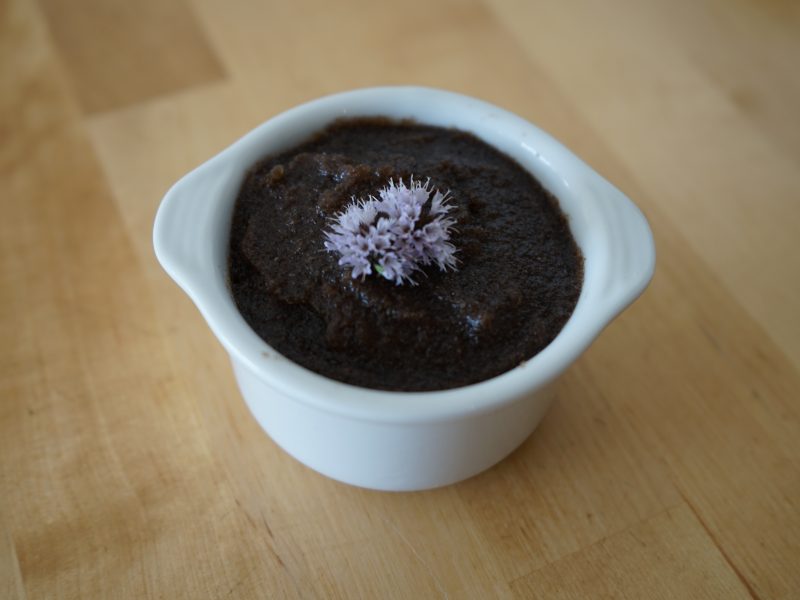
In this recipe, we make a mint-flavored jelly using wild water mint (mentha aquatica) and woodear mushrooms (auricularia auricula-judae) for gelatinization. Water mint is just one of the many kinds of wild mints. As its name suggests can be found close to water. It has purple flowers, which have a ball-like shape. Watermint (mentha aquatica) left and wood ear (auricularia auricula-judae) right Wood ears are amazing mushrooms. They are commonly used in Chinese cuisine in stir-fry dishes or salads. However, they also grow in Europe for most of the year when its not too warm. As the name suggests they
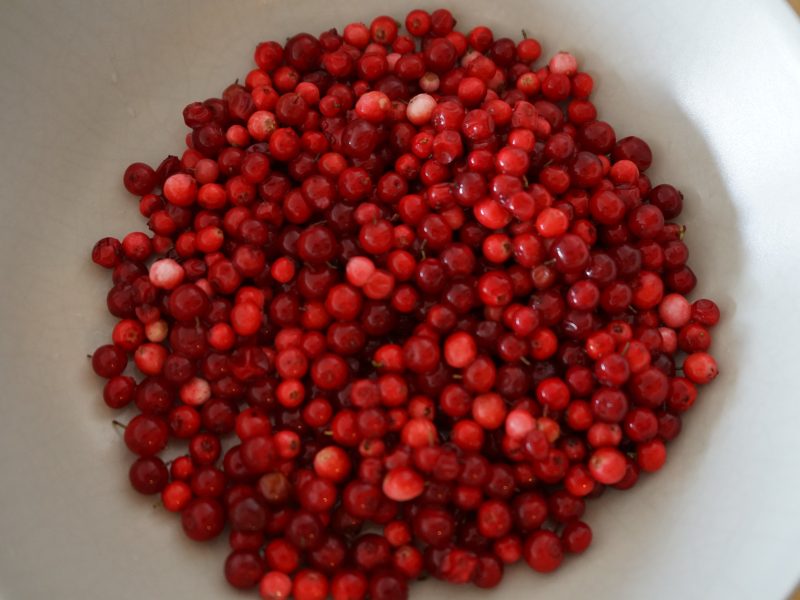
Norway is a true berry paradise. In the surrounding of Oslo, where we went for vacation, we found four types of berries: bilberries (Vaccinium myrtillus), wild raspberries (Rubus idaeus), wild strawberries (Fragaria vesca), and lingonberries (Vaccinium vitis-idaea). This last type is used for the classical Scandinavian lingonberry jam. Lingonberry jam is commonly used in Norwegian, Swedish, and Finnish cuisine. It can be served as condiment for meat or fish based dishes as well as in deserts. Lingonberry jam is easy to make. Pasteurized in a glass jar it can be stored for longer. Four Norwegian barriers: bilberries (Vaccinium myrtillus), wild

Strictly speaking, gravy is a meat-based sauce. In this recipe, we make a vegetarian version based on wild ingredients. The main components are cooking liquid of dried mushrooms and roasted chicory (Cichorium intybus) root. Chicory root has been used during various periods of economic crisis as a coffee substitute. The resulting coffee substitute is also used in cajun cooking to create a gravy by deglazing a pan after frying ham. For additional flavoring, we used dried yarrow (Achillea millefolium) powder, which has a nutmeg-like taste and fresh ground elder (Aegopodium podagraria) leaves, which add a carrot / parsley-like flavor. To
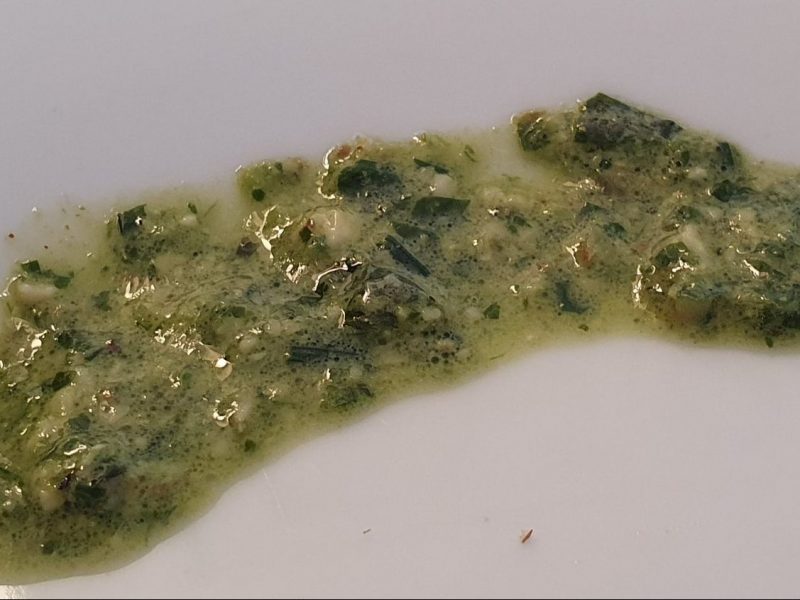
Wild garlic pesto is a popular pesto that you may have heard already about. Here we present an upgraded recipe with three wild plants: wild garlic (Allium ursinum), crow garlic (Allium vineale), and garlic mustard (Alliaria petiolata). All these plants grow in spring in a similar environment, quite often next to each other. Wild garlic has a rather mild garlic taste, crow garlic is very similar to chives, and garlic mustard tastes like mustard greens with a hint of garlic and this last one will spice up your pesto. You can use wild pesto in multiple ways: as a bread
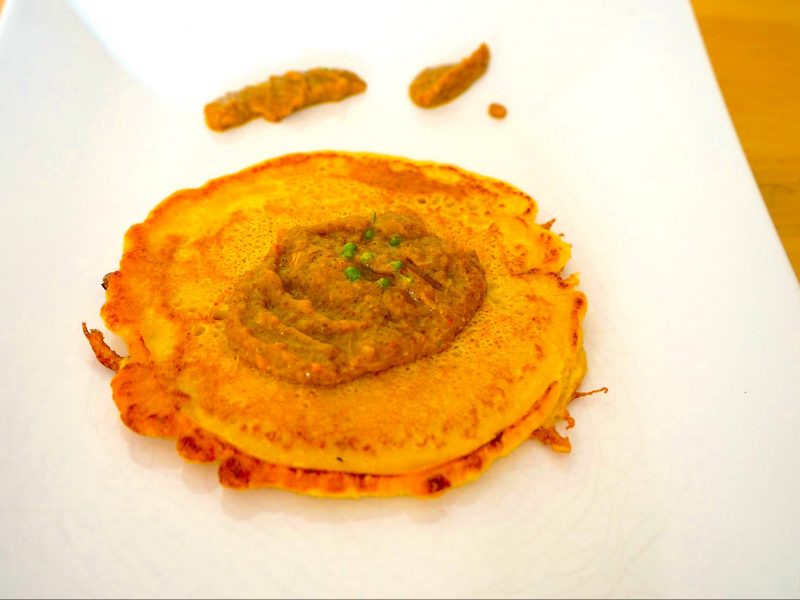
Japanese knotweed (Reynoutria japonica) is both botanically and culinary closely related to rhubarb. In Japan, it is categorized as “sansai” which translates to mountain vegetables. It is also considered as one of the worst invasive species worldwide as its deep strong roots which are hard to remove are capable of destroying infrastructure. In the kitchen the stems can be used in similar ways as rhubarb as long as its harvested when the stems are not too hard and fibrous. This is in early spring. Both rhubarb and Japanese knotweed contain oxalic acid which is not too healthy but as long